Online Games for Long Distance Couples That Fit Your Mood
Which Online Games for Long Distance Couples Fit Tonight?
For a quick phone game, try 4 in a Row on Plato; for moves between busy days, try correspondence chess on Lichess. Split Fiction suits an energetic cooperative date, while Stardew Valley offers a shared project. The best online games for long-distance couples leave room for the kind of connection both people want that evening.
Allow 5–10 minutes for text guessing games, 15–30 for questions or a short match, or 45–90 for a cooperative adventure. These are suggested date windows, not guaranteed game lengths. Constant talking in an action game usually means coordinating moves; it does not necessarily leave space to share your day.
Imagine this hypothetical couple: Alex finishes work just as Sam is getting ready for bed. They plan an ambitious adventure, spend their overlap installing it, and barely talk before signing off. Neither dislikes playing together. Their choice simply asks for more time and attention than that evening offers. Their next attempt starts with a different question: what can they enjoy with the energy they actually have?
The recommendations below distinguish free access from paid hosting, and live sessions from asynchronous turns. For a broader selection across phone, computer and tabletop formats, explore these online games for couples to play together. Start with the format that fits your evening before comparing individual titles.
Question Games and Couple Quizzes for Meaningful Conversation
When catching up matters most, an open-question game over your existing call gives both people room to speak. It costs nothing beyond your usual connection, works with two players on calling or messaging devices, and can happen live or through delayed replies.
Five prompts are enough to begin. Start with “What’s your ideal snack?”, then move to “Which ordinary day together would you repeat?” or “What should we plan for our next visit?” To make it a guessing game, each person predicts the other’s answer before the reveal. An unexpected answer is an invitation to ask why, not evidence of a compatibility problem.
Classic 20 Questions is a different activity: one person chooses a hidden object, place or person, and the other narrows it down through yes-or-no questions. It suits a partner who enjoys deduction but feels put on the spot by personal prompts. Answering 20 relationship questions is a conversation exercise, not the same game.
Our editorial preference is to leave relationship quizzes unscored. Remembering a favorite snack is sweet, but someone’s preferences can change. A partner who asks what you like now is paying attention too. Let an interesting answer interrupt the game; finishing the question list is less valuable than following a conversation you both want to have.
Flirty Texting Games for Five-Minute Check-Ins
Emoji riddles, a shared story and imaginary-date “Would you rather?” all work for two people in an ordinary message thread. They are homemade games rather than separate apps, with no additional purchase and no requirement to be online together.
An emoji riddle can point to a shared memory: “🌧️☕😘” might mean a rainy café kiss. Allow two guesses before revealing the answer. For a shared story, alternate sentences beginning with something like “You knock, holding a mysterious picnic basket.” Four turns can produce a complete little scene; it need not become another unfinished obligation.
“Rooftop dinner or midnight pancakes with me?” makes an easy “Would you rather?” prompt because the explanation is more interesting than the choice. Consenting adults can make it flirtier, with an uncomplicated pass on anything that feels uncomfortable. Replies can wait, and neither person owes a performance.
For Alex and Sam, the couple in our opening scenario, that picnic-basket story replaces the next rushed gaming appointment. Sam adds an increasingly impractical dessert; Alex supplies the escape from the rain. They finish their scene before bedtime, and the dessert becomes a running joke in the next morning’s messages. The useful change is small: they choose something they can finish in their available time, giving them a shared memory instead of another interrupted installation.
Free Online Games for Long Distance Couples Without Much Setup
Lichess is a no-purchase choice for two people who enjoy chess. It supports browser play as well as phone apps, with live matches for a shared evening and correspondence games for separate schedules. Its official app page lists friend challenges, correspondence chess and free, ad-free features. Treat the access information in this article as planning guidance dated September 27, 2026; availability, pricing and account requirements can change, so check the relevant service before arranging a date around a particular feature.
A live game suits focused rivalry; correspondence gives each person longer to consider a move. Neither format makes chess effortless for a beginner. If one partner already knows openings and the other is learning how pieces move, discussing positions together may be more enjoyable than maintaining a win tally. Choose that learning format together before starting.
4 in a Row on Plato offers a more immediately familiar contest. Two players take turns dropping pieces into a grid and trying to connect four while blocking each other. The app is offered on iOS and Android with free play and optional cosmetic purchases, subject to changes in its current listing. Once installed, add your partner and look for the private-game invitation; a live match suits a brief, playful check-in.
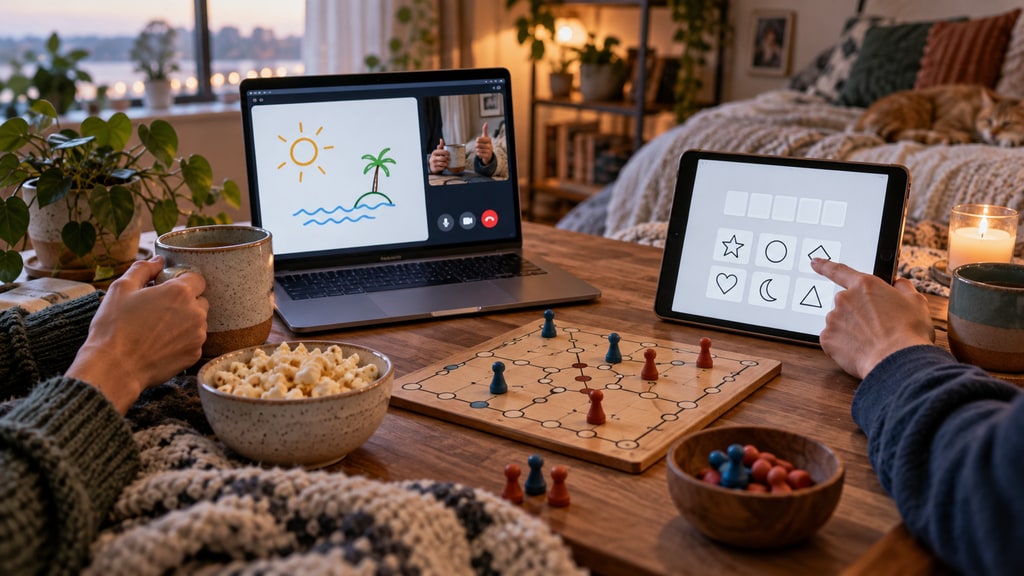
For a completely installation-free fallback, drawing over an existing video call still works. Each partner needs paper and a pen: secretly choose an object, draw it without letters, and hold it up for the other to guess. Reveal after three guesses, swap roles and play three rounds each. Leaving it unscored makes a wonderfully questionable drawing part of the amusement rather than a disputed result.
Phone Games for Couples With Different Devices and Schedules
Different phones require shared multiplayer support; different schedules require asynchronous play. Those are separate needs. Two apps with matching names do not necessarily connect, and taking turns does not automatically mean a game can wait overnight.
Plato Pool is worth considering for couples who prefer aiming a shot to studying a chessboard. Check the current iPhone or Android listing and in-app options for two-player 8-ball, private invitations and any charges. Free access, optional cosmetic purchases, and live or turn-based settings are subject to change and have not been independently verified for this article. If a turn-based option is available, examine its deadline before assuming it allows replies around your working hours.
Lichess correspondence chess is the clearer choice when you specifically want an ongoing strategic exchange. Agree on a comfortable move deadline and let the match unfold alongside ordinary messages. Cross-device invitations have not been independently tested for this article, so a successful practice challenge is more useful than discovering an account problem at bedtime.
Consider what happens when a turn arrives during work or sleep. If the deadline would regularly expire before your partner can respond, that mode does not fit your schedule. An asynchronous game should give you something pleasant to return to, not another notification to feel guilty about. Keep conversation outside the match available too: making a move need not substitute for saying hello.
Cooperative Video Games for a Shared Date Night
Split Fiction suits two people who want an involved, live cooperative adventure. For two PS5 players, one purchased copy lets the other join through the free Friend’s Pass download; both need PlayStation Plus for online play. PlayStation’s guide to Split Fiction also describes a free opening that you can try together before buying the full game. Check those access terms when you download.
This is a choice for shared action and discovery. Both players have work to do, so save a conversation that needs undivided attention for a pause. Where experience differs, explaining one control at a time and alternating who suggests a solution can keep the evening collaborative. Give the less experienced player room to attempt a solution before stepping in; getting carried through every obstacle can leave someone feeling more like an audience than a partner.
Keep Talking and Nobody Explodes offers a different kind of teamwork. Two people can play live over a voice call: one operates the purchased game, while the other reads the free bomb-defusal manual. The game has versions for Windows, Mac, Linux, supported consoles, iOS and Android; check availability for your particular device before buying. The manual reader needs only a device that can display it or a printed copy.
The reader must not see the bomb. Describing symbols accurately and finding the right instructions is the point, so screen sharing would spoil the central challenge. Only the operator needs a paid copy for that arrangement, although swapping roles remotely requires the other person to have access to the game too. It is an appealing puzzle for couples who enjoy urgency; a countdown is a poor match when either person already feels rushed.
Competitive Games That Keep Rivalry Enjoyable
Jaipur on Board Game Arena is a two-player trading game for couples who enjoy planning without learning controller skills. It runs in a browser and offers real-time or asynchronous turn-based play. Jaipur is listed as a Premium title: one partner needs a paid Premium membership to create the table, and the other can join with a free account. Confirm the current membership requirement before subscribing.

Players collect, exchange and sell goods, weighing a larger future sale against the chance that their opponent will take the opportunity first. That gives the rivalry something specific to revolve around. A first session should include time to understand the rules and interface; familiarity matters as much as cleverness.
Plato Pool supplies a more physical-feeling alternative, while Lichess rewards deeper calculation. Neither becomes low-pressure merely because it is on a phone. Agree on whether advice is welcome: an experienced player may intend to help, while their partner wants the pleasure of working out a move independently. If both want feedback, discussing a turning point after the match avoids interrupting every decision.
The same principle applies to homemade trivia: rotating categories avoids repeatedly rewarding one person’s specialist knowledge. Racing, if you already own a suitable game with private online play, benefits from a practice lap or an agreed handicap. Decide how many rounds you want before the first result. Close contests can be fun, but a reluctant rematch rarely improves the date.
Longer Games for Building Something Together
Stardew Valley suits couples who want a farm to return to across multiple dates. Two people can play online together, although the game also supports larger groups. A straightforward setup is two computers running compatible Windows, Mac or Linux versions, with a paid copy for each player. This is live cooperative play, not an asynchronous shared farm.

Other supported console versions exist, but do not assume a console copy can connect to a computer copy. For an ordinary hosted farm, the host must have the game running for the other player to join. Mobile multiplayer has separate experimental setup considerations, so it is not the first recommendation here for an easy remote date.
Picture it: a quiet weekend evening, a laptop on a small desk, and a partner’s voice on the call while you decide where the garden should go. The appeal is having a common place and a modest project. The tradeoff is that farming brings resource decisions and an in-game clock. A peaceful-looking setting does not guarantee an undemanding evening.
A small garden makes a manageable first project. While both players are connected, one can prepare the ground while the other gathers supplies, with major purchases discussed together. Before committing shared resources, agree whether you want to optimize the farm or enjoy experimenting. Neither approach is wrong, but competing assumptions can turn a decorating session into an argument about wasted money. Leave a brief note about the next task so you can return without spending half the following date remembering your plan.
How Can You Make a Remote Game Night Easier to Repeat?
Make the practical setup routine and let the game change with your energy. Test access before the date, agree on a finishing time and keep one familiar fallback ready.
Before a new title becomes a date, use one compact access checklist:
- Confirm compatible versions and devices, the two-player mode, and whether you both need accounts, purchases or subscriptions.
- Finish installations and updates, then test the friend invitation and audio connection.
- Review controls, captions and other accessibility needs, along with any live or asynchronous turn deadlines.
- Confirm the start time in both time zones and decide where the session can reasonably end.
After that, a brief mood check is enough. Ask whether the planned game still sounds appealing before loading it. Someone who wanted a demanding puzzle yesterday may prefer an easy conversation tonight. If a session feels awkward, identify the practical cause: confusing controls call for a different adjustment than a game that leaves no room to talk. Change that part next time instead of treating one disappointing evening as a verdict on playing together.
For the surrounding date, this guide to planning a virtual game night that feels like a date covers preparation, pauses and closing the evening together. Before signing off, name a moment you enjoyed and suggest a specific next time. That gives the next invitation somewhere to begin.
Conclusion: Choose a Game That Matches the Connection You Want
Choose according to the attention you want to share. A competitive match gives you an opponent to react to; a cooperative puzzle gives you a problem to solve together. A text game can keep a small exchange going when there is no shared evening available.
Our strongest recommendation is to keep both a short option and a longer favorite. Then a busy day can change the size of the date without automatically canceling it. Give a game another outing because you both enjoyed the time together, rather than because you bought it or feel obliged to finish. The useful measure is whether both people want to return.
Make the invitation easy to answer: “We have 20 minutes tonight—do we want to catch up, solve something together, or compete?”
Source: https://whattogetmy.com/online-games-long-distance-couples/