
Holiday Relationship Advice 101: Surviving In-Laws & Work Stress
The holiday season—a time often depicted in movies as perfectly cheerful—can often feel like an obstacle course for even the strongest relationships. If you are feeling the pressure of juggling family expectations, demanding work deadlines, and trying to maintain intimacy with your partner, you are not alone. This guide is designed to offer practical, foundational holiday relationship advice to help you navigate these high-stress periods successfully, turning potential pitfalls into opportunities for connection.
What is Holiday Relationship Management?
At its simplest, holiday relationship management is the proactive process of protecting and nurturing your bond with your significant other when external pressures—like extended family visits or end-of-year professional demands—are at their peak. It is not about avoiding stress entirely, but rather about building a sturdy framework so that stress doesn't break your connection.
For beginners, think of your relationship like a mobile phone battery. During regular times, it charges easily. During the holidays, it’s running high-demand apps (like navigating complicated dinner logistics or preparing for a big presentation) all day long. Holiday relationship management is the strategy you use to ensure you plug in and recharge together.
Why This Matters for Beginners
You might think that if a relationship is strong, it should withstand any holiday pressure automatically. However, stress acts like an acid—it erodes things slowly if you don't protect them. Learning these foundational skills now provides immediate relief and sets a positive precedent for future years.
The benefits of mastering basic holiday relationship advice include:
- Reduced Conflict: By anticipating stress points, you prevent small annoyances from escalating into major arguments.
- Deeper Understanding: Successfully navigating a tough situation together builds confidence in your partnership.
- Setting Healthy Boundaries: You learn how to protect your "couple time" even when surrounded by others.

Essential Terminology Explained
To discuss these strategies effectively, let’s define a few key concepts that are crucial for effective communication in marriage and partnership during stressful times:
1. Boundary Setting
This means clearly defining what you will and will not accept in terms of time, energy, and behavior from others (including family members). Example: "We will visit Aunt Susan from 2 PM to 5 PM, and then we need quiet time at home."
2. De-escalation Tactics
These are simple, pre-agreed-upon phrases or actions used when a conversation starts getting heated. They act as an emergency brake. Example: Agreeing beforehand that if one person says, "Let’s pause," the other immediately drops the topic.
3. Stress Buckets
Imagine each partner has a bucket for stress. When you are dealing with managing in-law relationship stress on top of work deadlines, your bucket fills up fast. Recognizing when your partner’s bucket is full (and vice versa) is key to offering support instead of adding more pressure.
Getting Started: First Steps for Connection
You don't need grand gestures to improve your connection; you need small, consistent actions. Here are the first steps to implement immediately:
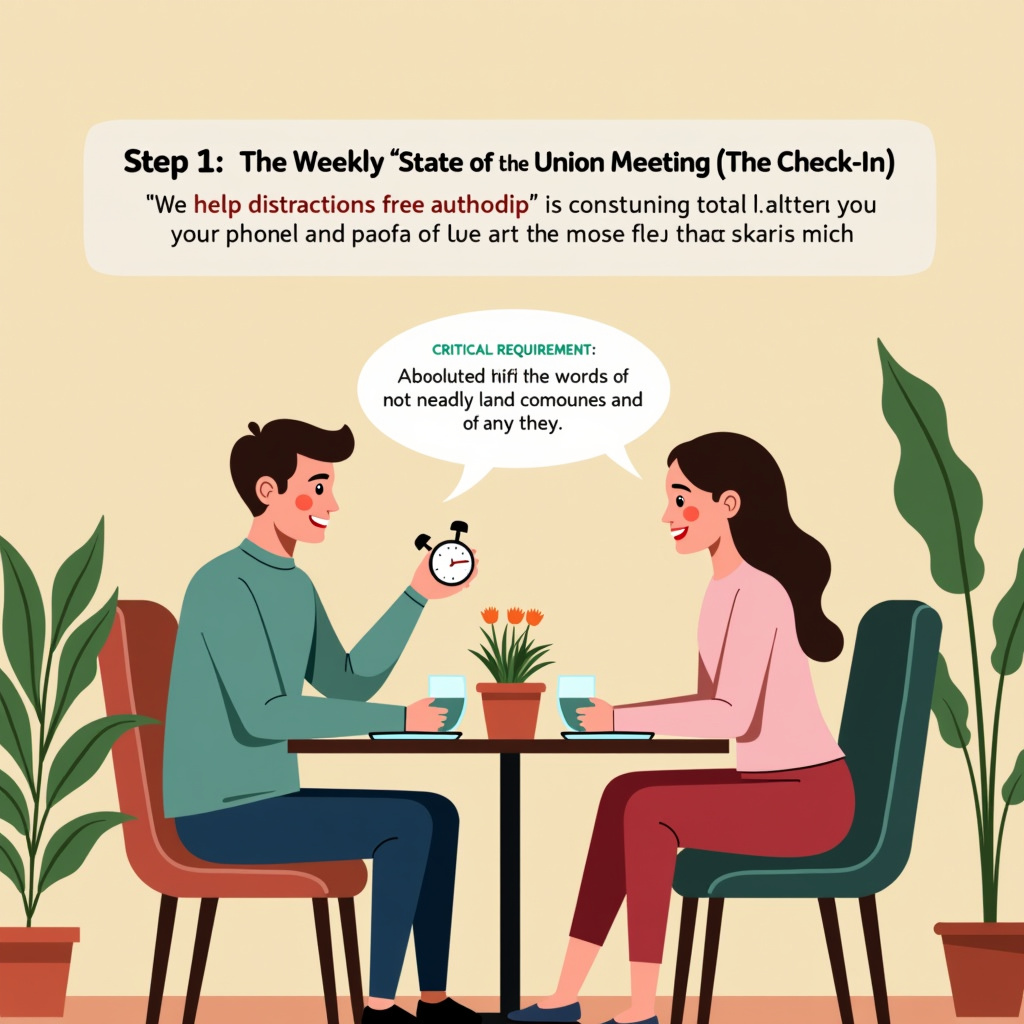
Step 1: The Weekly "State of the Union" Meeting (The Check-In)
Schedule 15 minutes, totally distraction-free (no phones, no TV), specifically to talk about logistics and feelings. This is vital for effective communication in marriage.
- Logistics First (5 minutes): What events are coming up? Who is cooking? What are the deadlines at work?
- Feelings Second (10 minutes): How are you personally feeling about the schedule? Use "I" statements (e.g., "I feel overwhelmed when we have three events in one day," instead of "You always overschedule us").
Step 2: Creating "Sacred Time" for Staying Connected
When work demands are high, it’s easy to let intimacy slide. You must schedule time to be partners, not just co-managers of the household. This is critical for staying connected during stressful work periods.
- The 20-Minute Rule: Commit to 20 minutes of dedicated, non-logistical time together every evening. This could be reading side-by-side, having a cup of tea, or simply cuddling without discussing chores or the next day’s agenda.
Step 3: Developing a Unified Front on In-Laws
For beginners, managing in-law relationship stress often involves feeling unsupported by your partner when dealing with their family. Before any visit, have a brief meeting:
- Identify one or two potential friction points (e.g., unsolicited advice about finances).
- Agree on a united response. If your mother-in-law criticizes your partner’s career choice, your partner should respond first, and you support their response immediately.
Common Beginner Mistakes to Avoid
Even with the best intentions, beginners often fall into predictable traps during the holidays. Recognizing these can save you significant heartache.
Mistake 1: Assuming Your Partner Knows How You Feel
During high stress, mind-reading is impossible. If you are silently fuming about an invitation, don’t wait until the event starts to express it. Use your scheduled check-in time to voice concerns calmly before the stress point arrives.
Mistake 2: Using Stress as an Excuse to Withdraw
When work is overwhelming, the natural instinct is to retreat into solitary activities or work longer hours. This starves the relationship of necessary emotional nourishment. Remember that staying connected during stressful work periods requires more effort, not less.

Mistake 3: Forgetting the Future (The Post-Holiday Plan)
The holidays feel endless when you are in them. To combat this feeling, make a small, concrete plan for something fun you will do after the major rush is over. This gives both of you something positive to look forward to, making the current stress feel temporary. This foresight is excellent dating advice for the new year.
Next Steps for Growth and Deeper Connection
Once you master the basics of communication and boundary setting, you can focus on proactive relationship building, especially as the new year approaches.
1. Refine Your "Dating Advice for the New Year" Strategy
Use the downtime after the holidays to actively plan for quality time. This isn't just about big trips; it’s about small, recurring dates. Discuss what made you feel most connected this past holiday season and commit to doing more of that in January.
2. Practice Empathetic Listening
When your partner shares a frustration about an in-law or a work issue, resist the urge to immediately offer a solution. Instead, practice validation. Try phrases like, "That sounds incredibly frustrating," or "I hear how angry that made you." Validation is often more powerful than advice.
3. Celebrate Small Wins
Did you successfully navigate a difficult conversation with your extended family without raising your voice? Did you both manage to get to bed before midnight despite a looming work deadline? Acknowledge these small victories. Positive reinforcement strengthens your ability to handle the next challenge.
Conclusion: Your Relationship is Worth the Effort
Navigating the complex demands of family obligations and professional life during the holidays requires intention, but it is entirely achievable. By focusing on effective communication in marriage, setting clear expectations around managing in-law relationship stress, and prioritizing time for staying connected during stressful work periods, you are not just surviving the season—you are actively strengthening your partnership. Use this foundational holiday relationship advice as your blueprint, and look forward to implementing fresh dating advice for the new year built on a foundation of mutual respect and understanding. You have the tools; now go practice them with confidence.

