
Staying Connected 101: Surviving Work Stress & In-Laws
Welcome! If you’ve ever felt like your relationship is running on fumes because of demanding jobs or complicated family dynamics, you are definitely not alone. Navigating the pressures of modern life while nurturing a strong partnership requires intentional effort, especially when it comes to effective communication in marriage. This beginner's guide is designed to give you the foundational tools needed to keep your connection strong, even when external stress levels are sky-high.
We will break down simple, actionable strategies for managing external pressures—like intense work schedules and complex family relationships—so you can focus on what truly matters: each other.
What is Relationship Resilience? (The Beginner’s View)
In simple terms, relationship resilience is your partnership’s ability to bounce back after tough times. Think of your relationship like a rubber band. When you stretch it gently (a minor disagreement), it snaps right back to its original shape. When life throws a major stressor at it (like a huge work project or a difficult holiday gathering), you want to make sure it doesn't break.
This guide focuses on strengthening that "rubber band" so it can handle the inevitable stretching caused by external factors like work stress and managing in-law relationship stress.
Why This Matters for Your Partnership
When external pressures increase, couples often default to survival mode. This usually means less talking, more snapping, and feeling distant. Learning these foundational skills now prevents small stressors from turning into major relationship cracks later.
The benefits are significant:
- Reduced Conflict: You learn to address the stress rather than blaming your partner for being tired or distant.
- Deeper Trust: Successfully navigating tough times together builds confidence in your partnership's ability to withstand future challenges.
- Improved Well-being: When your home base (your relationship) feels secure, handling work stress becomes significantly easier.

Essential Terminology Explained
To get started, let’s clarify a few key concepts you’ll hear frequently when discussing partnership health:
- Active Listening: This is more than just hearing words; it’s showing your partner you understand their feelings. It involves putting down your phone, maintaining eye contact, and summarizing what they said before responding (e.g., "So, what I hear you saying is you feel overwhelmed by your boss’s demands?").
- Bids for Connection: These are small attempts your partner makes to get your attention, affection, or support. A bid could be a sigh, a joke, or asking, "How was your day?" Ignoring these bids is a major contributor to feeling disconnected.
- Boundary Setting: This is crucial for managing in-law relationship stress. A boundary is a clear line you draw to protect your relationship’s time and energy. For example, setting a boundary might mean deciding together that you will only visit certain relatives once a month.
Getting Started: First Steps to Staying Connected During Stressful Work Periods
When deadlines loom and emails pile up, carving out connection time feels impossible. Here are three basic, non-negotiable steps to start implementing immediately to ensure you are staying connected during stressful work periods.
Step 1: The 10-Minute Check-In
Schedule, or commit to, ten minutes every day where work talk and problem-solving are strictly forbidden. This is sacred time.
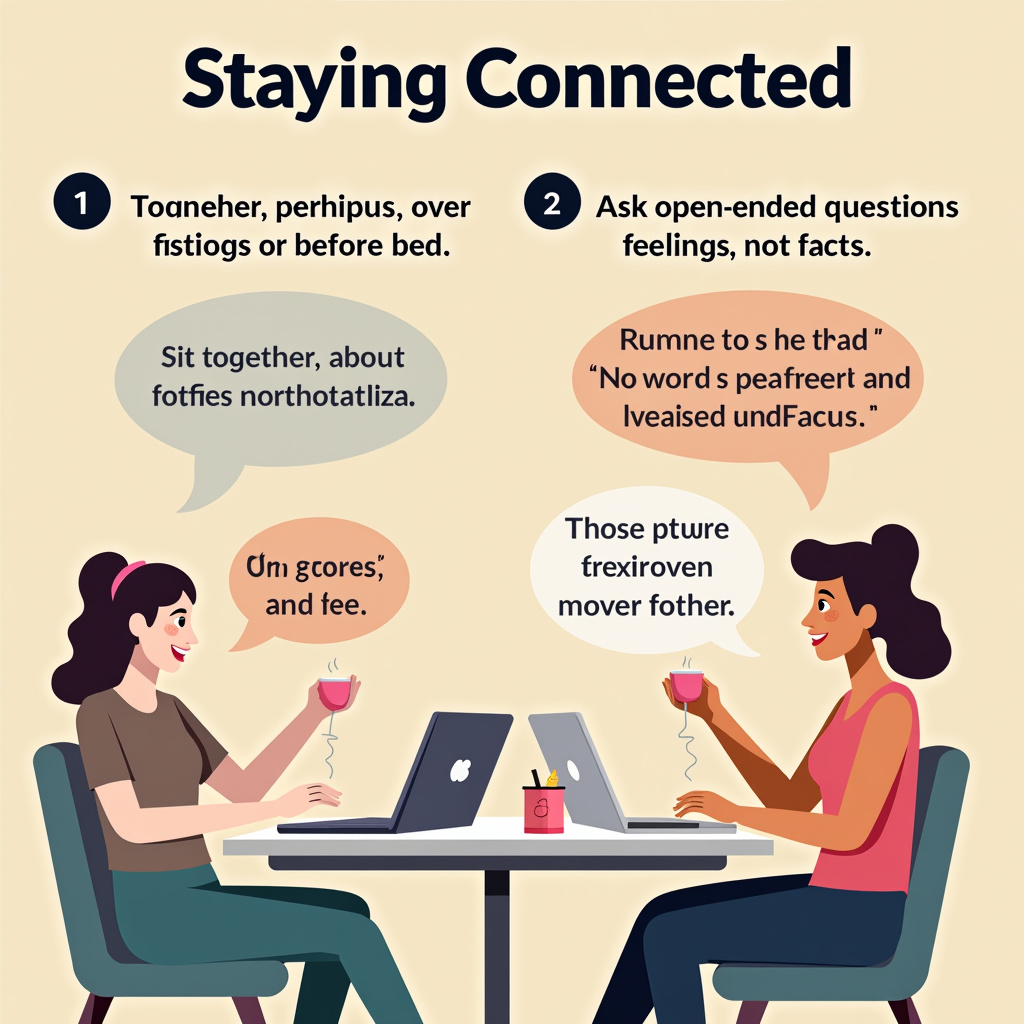
- Action: Sit together, perhaps over coffee or before bed.
- Focus: Ask open-ended questions about feelings, not facts. Instead of "Did you finish that report?" try, "What was the most frustrating part of your day?" or "What made you smile today?"
Step 2: Recognizing the Pull-Away Signals
One of the most painful parts of relationship strain is the feeling that your partner is emotionally retreating. Learning the signs your partner is pulling away allows you to intervene early.
Common beginner signs include:
- Reduced physical affection (fewer hugs, less hand-holding).
- Increased reliance on separate hobbies or screen time to avoid conversation.
- Shorter, less detailed answers when asked about their day.
If you notice these signals, the goal is not to accuse, but to invite connection. Try saying, "I miss connecting with you lately. Can we schedule a walk tomorrow?"
Step 3: Creating a Unified Front Against In-Laws
In-law stress often happens when couples aren't aligned on how to respond to external family pressure. Effective communication in marriage is vital here.
- The "Us vs. The Problem" Mindset: Frame the issue as "How we handle Uncle Bob’s comments," not "You need to tell your mother to stop."
- Pre-Game Planning: Before attending a family event, briefly discuss anticipated stressors and agree on a united response or an exit strategy if things get tense.
Common Beginner Mistakes to Avoid
When you are feeling overwhelmed, it’s easy to fall into established negative patterns. Watch out for these common traps:
- The Fix-It Trap: When a partner expresses stress (e.g., "My boss is impossible!"), the natural instinct might be to offer solutions immediately. Often, the stressed partner just needs validation first. Try validating ("That sounds incredibly unfair") before offering advice.
- Assuming Intent: When a partner is quiet, beginners often assume they are angry or deliberately avoiding them. If you notice signs your partner is pulling away, ask gently rather than assuming malice. "You seem quiet tonight; is everything okay?" is better than "Why are you ignoring me?"
- Ignoring the Calendar: Failing to plan for connection time is a guarantee that it won't happen. If you wait until you "feel like" connecting, stress will have already won.
Next Steps for Growth and Deeper Connection
Once you have mastered the daily check-in and boundary basics, you can focus on proactive maintenance. This often involves scheduling intentional time together, which brings us to dating advice for the new year.
Even if you are married for years, dating your partner is crucial. Dating isn't just for new couples; it’s for established couples needing to remember why they chose each other.
- Schedule Date Night (Non-Negotiable): Once a month, plan a date that is completely free of logistics talk (bills, kids, in-laws). Use this time to explore shared interests or simply enjoy each other's company.
- Practice Appreciation: Make it a habit to verbally acknowledge specific things your partner does well. "Thank you for handling that difficult call with the insurance company today; I really appreciate you taking that off my plate." Specific praise reinforces positive behavior.
- Learn Conflict Repair: When disagreements inevitably happen, focus on repairing the rupture quickly. This might mean apologizing specifically for your tone, even if you stand by your opinion.
Conclusion: Building Your Resilient Partnership
Surviving work stress and difficult family dynamics is an ongoing practice, not a destination. By focusing on effective communication in marriage—listening actively, setting clear boundaries for managing in-law relationship stress, and proactively checking in when you spot the signs your partner is pulling away—you build a robust foundation.
Remember, your relationship is the anchor during life’s storms. Start small today with that ten-minute check-in. By prioritizing connection now, you are setting the stage for a stronger, more resilient partnership well into the new year and beyond. You have the tools; now, go build that connection!

