Couples Arguing Over Online Games: When It Matters
Couples arguing over online games may be facing a bigger problem when disagreements involve repeated humiliation, ignored boundaries, or fear of what happens if someone stops playing. Competitive banter can be harmless when both partners enjoy it, can leave freely, and reconnect afterward.
1. When Are Couples Arguing Over Online Games Facing a Bigger Problem?
Couples arguing over online games may be facing a bigger problem when disagreements involve repeated humiliation, ignored boundaries, or fear of what happens if someone stops playing. Competitive banter can be harmless when both partners enjoy it, can leave freely, and reconnect afterward.
One argument does not establish a relationship pattern, but a serious threat deserves attention even once. Notice what happens after someone says, “I’m not enjoying this anymore”: does their partner listen, or make stopping costly? That response is a practical clue, not a diagnostic test. Being competitive does not excuse making another person afraid.
The score is rarely enough to explain the dispute. A complaint about “one more match” might concern a broken dinner plan; an argument about strategy might begin with embarrassment in front of friends. Identify what actually hurt before trying to solve the wrong problem.
2. Why Do Couples Argue Over Online Games?
Couples can argue over online games because they expect different things from the same session: relaxation together or serious competition. Unequal skill, unsolicited coaching, ranking pressure and criticism in front of teammates can turn shared downtime into an unwanted performance review.
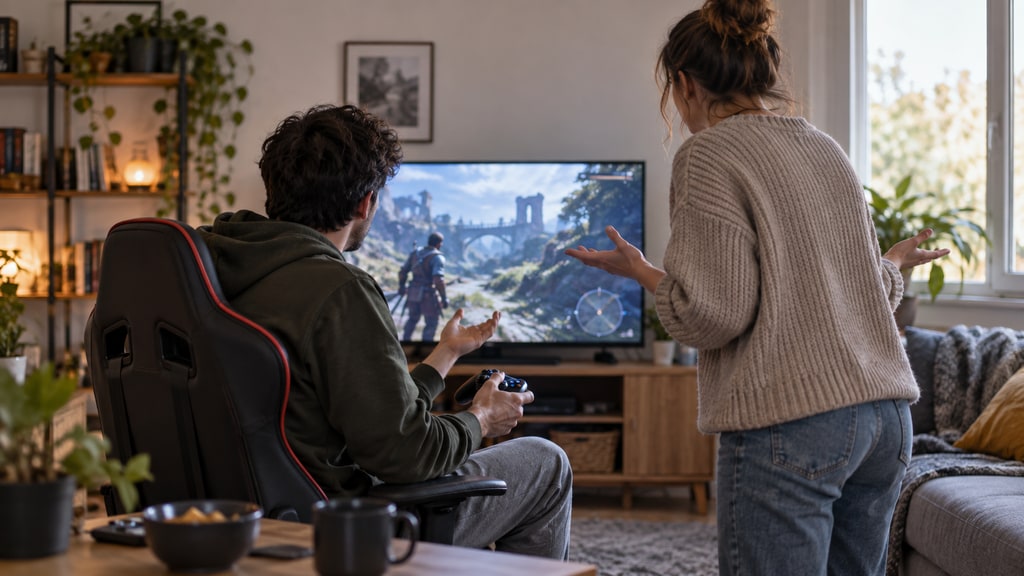
Picture it: fictional partners Alex and Sam settle in for an evening together. Sam has understood the invitation as a chance to catch up. Alex queues for a ranked match, hoping to improve their standing, and starts correcting each decision. Sam becomes quiet, then puts down the controller. Alex sees someone giving up; Sam feels judged rather than included.
Their mismatch explains how the evening went wrong, but it does not excuse what either person says next. They have two separate issues to resolve: what kind of evening they intended and how they treated each other when those intentions collided.
Other disputes concern arrangements outside the game. If someone agreed to cook dinner and keeps playing instead, changing the difficulty setting will not fix the broken commitment. Name the unfinished responsibility directly rather than arguing about whether gaming is a worthwhile hobby.
3. What Harmless Rivalry Looks Like
Harmless rivalry leaves both partners enjoying the contest without making either person’s competence or worth the target. Losing may be disappointing. It should not create a debt that the other person must repay through reassurance, another match or accepting an insult.
A laugh alone does not establish that banter is welcome. People sometimes laugh when embarrassed or unsure how to respond. After a pointed joke, “Still fun, or should I ease up?” gives the other person an opening. The answer matters more than the joker’s intention.
Different preferences do not make a couple incompatible. One person may love fast competition while the other prefers time to think. If the relationship feels respectful and the problem is simply format, these online games for couples to play together offer alternatives to consider. Choose according to what both people enjoy; a cooperative label alone does not prevent bossiness or blame.
4. Communication Patterns That Turn Frustration Into Hurt
Insults, blame and dismissing feelings can turn game frustration into personal hurt. For Alex and Sam, “you missed that move” becomes “you ruin everything.” The second statement turns a particular mistake into a sweeping judgment about the partner.
Another unhelpful turn is arguing exclusively about how a concern was expressed. Sam might sound irritated when asking Alex to stop coaching. That tone can be discussed, but it does not erase the request. Addressing only the irritation leaves the original problem untouched.
A cooling-off break and silence used as punishment can look similar from outside. Silence alone does not establish intent. Where it is safe, explaining the need for space and naming a realistic time to return reduces uncertainty: “I’m too upset to discuss this well. I’ll check in after dinner.”
The Gottman Institute’s conflict guidance discusses repair attempts such as pausing and rephrasing. This is general relationship guidance, not evidence specific to online gaming. A repair should acknowledge the injury: “That was unfair. Missing a move doesn’t justify insulting you.”
5. When Does Gaming Conflict Become Controlling?
Gaming conflict becomes controlling when a partner uses surveillance, intimidation or punishment to restrict the other person’s choices. Demanding passwords, dictating who someone may play with, blocking an exit or threatening retaliation for logging off are reasons for concern.
The National Domestic Violence Hotline’s information on types of abuse describes technology-related control, including demands for account access. A shared account arrangement freely chosen by both people is different from access demanded under threat.
Mutually agreed expectations about online friendships or spending allow disagreement and revision without fear. “We need to discuss purchases from our joint account” raises a shared financial concern. “Give me your password or you’ll regret it” uses intimidation. A disagreement alone does not establish a pattern of coercive control, but physical intimidation or a serious threat deserves attention even once.
6. How Can Couples Stop a Gaming Argument From Escalating?
If both partners feel safe, stop the exchange and arrange to revisit the issue after taking space. A brief statement is enough: “The comments have become personal. I’m stopping now, and we can talk after dinner.”
Make the pause a break from the dispute. Leave voice chat and resist continuing the same argument through messages or teammates. A long explanation while someone is angry can become another set of points to contest. You can explain the concern more fully later.
A return time is a commitment to check in, not a demand that someone feel calm on schedule. If more time is needed, say so and suggest another opportunity. This approach requires cooperation; it cannot make an intimidating partner behave safely.
Someone who feels unsafe does not owe the other person a completed match, a negotiated pause or a face-to-face discussion before seeking help. Prioritize getting to a safer place and contacting someone trustworthy or a specialist support service when it is safe to do so.
7. Repair the Hurt Before Restarting the Game
Repair begins with the specific behavior and its impact. Sam might say, “You criticized my decisions in front of everyone; I felt belittled. Please save advice for when I ask.” That request gives Alex something concrete to change.
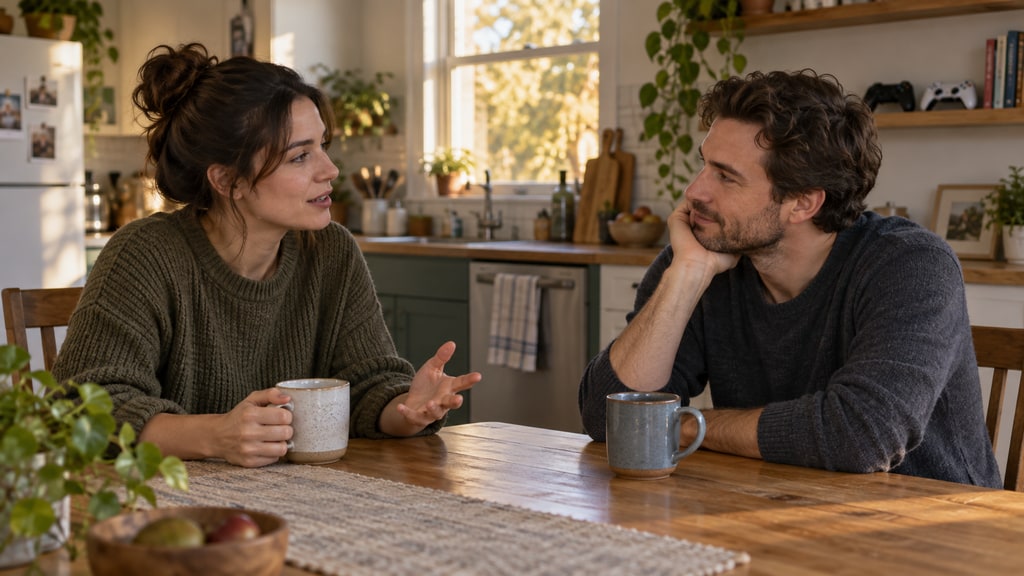
In this illustrative scenario, Alex initially wants to explain the ranking pressure. Instead, Alex acknowledges the choice: “I mocked your move publicly. That was disrespectful. I’ll stop giving advice unless you ask.” The explanation about wanting a competitive session can come afterward, without making Sam responsible for the insult.
Because the comment happened in front of teammates, Alex can ask whether Sam would welcome a brief correction there too. Sam may prefer to leave it private. Repair should not create another unwanted public moment.
Sam does not have to accept the apology immediately or restart the game to prove forgiveness. My editorial view is that the strongest apology makes room for the hurt person’s pace. Asking for instant reassurance shifts the work back onto them.
8. Agree on What Playing Together Should Look Like
Before the next session, make the invitation specific enough that both people know what they are accepting. “A relaxed game while we talk” sets a different expectation from “a focused ranked session.” Neither preference is wrong, and neither obliges the other person to join.
Useful agreements address the actual source of friction:
- Advice: Ask whether coaching is welcome before giving it. An invitation to help with one move is not permission to direct the whole session.
- Time: Decide when to stop starting new matches. Allow for uncertain match lengths rather than promising an exact finish you cannot guarantee.
- Shared obligations: Settle who is handling dinner, childcare or other commitments before either person becomes absorbed in play.
- Spending: Clarify which purchases require a conversation, especially when using shared money.
For partners whose limited time together disappears into setup or lengthy sessions, this guide to online games for long-distance couples that fit the evening distinguishes quick exchanges from more demanding activities. It is useful for a scheduling mismatch, not a remedy for mistreatment.
Alex and Sam decide to keep ranked play separate and try a relaxed shared session another evening. When Alex starts to offer a correction, Alex asks first. Sam declines, and they carry on. That small moment gives their agreement substance: Sam can participate without becoming a student, and Alex still has an outlet for serious competition elsewhere.
9. What If the Same Arguments Keep Happening?
If arguments keep recurring, assess whether the agreed changes happen in practice. Another promise means little if the same insults or broken commitments follow it. Frequent gaming alone is not grounds to label someone’s behavior a disorder.
Be specific about what remains unresolved. Has the time agreement proved unrealistic, or does one person disregard it? Does a request for less coaching lead to adjustment or ridicule? A plan that needs revision differs from a boundary that someone refuses to respect.
Relationship counseling is an option when both partners feel safe speaking openly. If there is intimidation or control, seek confidential individual or specialist support rather than assuming a joint conversation is the right next step. You do not have to persuade your partner that the problem is serious before asking for help.
The payoff in Alex and Sam’s hypothetical story is not that choosing a different mode fixes a relationship. Their evening improves because Alex changes how they respond to Sam. Without that change, the new game would merely provide a different setting for the same hurt.
10. Conclusion: Judge the Pattern Beyond the Screen
A shared hobby is an invitation, not a test of loyalty. My recommendation is to protect the relationship before protecting a gaming routine: separate play, a shorter session or another activity can all be reasonable choices when both people remain free to choose.
For your next conversation, identify one actual incident and the response you need: “When I asked you to stop coaching, you laughed. Next time, I need you to take that request seriously.” What happens afterward will tell you more than an argument about who is too competitive.
If expressing that need brings fear or retaliation, seek confidential support from someone you trust or a domestic abuse support service. You do not need to settle on a label before asking for help.
Reader conversation
0 comments
Your comment is live.
Thanks—your comment is waiting for a moderator.
That comment could not be published. You can revise it and try again.
That comment could not be accepted.
Be the first reader to add something useful.