

5 Quick Wins for Connection During Work Stress Now
The modern professional landscape often demands peak performance, which inevitably leads to periods of intense work stress. While professional demands are unavoidable, allowing that stress to erode personal relationships is a choice we can actively change. For couples navigating demanding careers, staying connected during stressful work periods is not a luxury—it’s a necessity for long-term partnership health. This article delivers five immediate, actionable "quick wins" designed to inject connection back into your relationship, whether you are dealing with daily pressures or preparing for higher-stakes times like the holiday relationship advice season or navigating complex family dynamics, such as managing in-law relationship stress.
These strategies focus on maximizing positive interaction in minimal time, providing immediate relief and building resilience against the strain that work pressure puts on intimacy and understanding.
Quick Win 1: The 5-Minute "Transition Touchpoint"
This strategy is designed to create a definitive boundary between work life and personal life, preventing stress residue from contaminating your evening.
Why It Works
Our brains need clear signals to switch gears. When you walk in the door (or log off from remote work), your nervous system is still operating in "high alert" mode. A deliberate, non-verbal connection forces a shift in focus.
How to Implement It
Schedule a specific, short ritual for the moment you transition roles. This should take no more than five minutes.
- Physical Connection: As soon as you see your partner, stop what you are doing. Initiate a hug that lasts a minimum of 15 seconds, or hold hands while standing together without speaking for two minutes.
- Eye Contact: Look directly into their eyes while maintaining the physical connection.
- Acknowledge the Shift: Say one simple phrase like, "I’m home now," or "Work is done."
Expected Results or Benefits
This ritual lowers cortisol levels immediately and signals safety and presence to your partner, directly counteracting the signs your partner is pulling away due to distraction.
Pro Tip
If you are working remotely and your partner is also busy, agree to send a specific emoji (like a green checkmark) signaling you are logging off, followed by the physical connection ritual as soon as possible.

Quick Win 2: The "Daily Appreciation Snapshot"
When stressed, we often default to discussing problems, logistics, or complaints. This quick win forces a positive data input into the relationship bank.
Why It Works
Appreciation is the antidote to contempt, which is one of the most corrosive elements in relationships. Focusing on what’s working, even when things are tough, reinforces mutual value.
How to Implement It
During dinner or before bed, commit to sharing one specific, genuine appreciation for your partner.
- Avoid Vague Praise: Instead of "Thanks for everything," try: "I really appreciated how you handled that difficult phone call this afternoon; you were so composed."
- Keep it Brief: One sentence is enough. The goal is specificity and sincerity, not a long monologue.
Expected Results or Benefits
This practice significantly improves the emotional climate. It’s a powerful tool for effective communication in marriage because it models positive feedback loops.
Pro Tip
If you are struggling to find something, appreciate an effort rather than an outcome. "I noticed you made an effort to tidy the kitchen even though you were exhausted—that meant a lot."
Quick Win 3: The "No-Problem Check-In" (The 10-Minute Connection Window)
This tip directly addresses the tendency to only communicate when there is a crisis or a chore list.
Why It Works
Relationships starve when conversation only revolves around logistics (bills, kids, schedules). This dedicated time ensures emotional connection remains prioritized over task management.
How to Implement It
Set a timer for 10 minutes, ideally right after the Transition Touchpoint (Quick Win 1). During this time, the following rules apply:
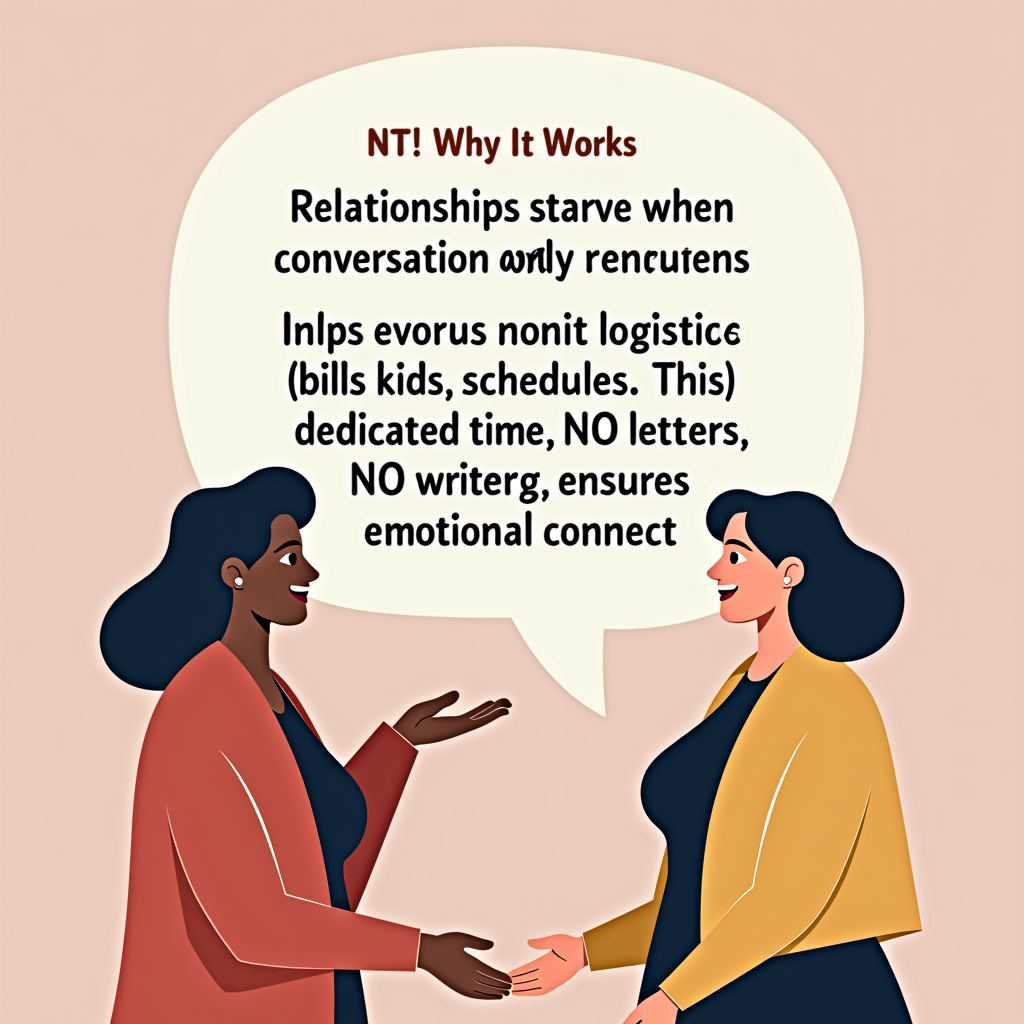
- No Logistics: Absolutely no discussion of chores, schedules, finances, or work problems.
- Focus on Inner World: Ask open-ended questions about feelings, dreams, or observations: "What was the most interesting thing you read today?" or "What’s one thing you are looking forward to this weekend?"
- Listen to Understand: The goal is not to offer solutions, but to reflect back what you hear: "It sounds like that meeting was really frustrating for you."
Expected Results or Benefits
This creates predictable, safe space for vulnerability. It is crucial when setting boundaries around external pressures, such as when managing in-law relationship stress, ensuring that external stress doesn't become the default topic of conversation.
Pro Tip
If you notice your partner starts drifting into a logistical topic, gently redirect: "That’s important, but can we put a pin in that until tomorrow? Right now, I just want to hear about you."
Quick Win 4: The "Weekend Connection Anchor" (Advanced Strategy for Deeper Bonding)
While the first three tips are daily maintenance, this strategy builds deeper connection buffers, which are vital when work demands escalate. This is excellent dating advice for the new year as you set relationship goals.
Why It Works
Stress depletes emotional reserves. Regular, dedicated time for shared joy and novelty recharges those reserves, making it easier to handle conflict or long workdays when they occur.
How to Implement It
Schedule one non-negotiable, low-effort activity together every weekend that is not about chores or errands.
- Keep it Short & Sweet: It doesn't need to be a full date night. It could be 30 minutes of playing a board game, walking around a local park, or trying a new coffee shop.
- Schedule It Now: Put it on the calendar immediately, treating it like a client meeting.
Expected Results or Benefits
Consistent shared positive experiences build a reservoir of goodwill. When you start seeing signs your partner is pulling away due to stress, you have a history of shared positive moments to reference and rebuild upon.
Pro Tip
Make the activity dependent on collaboration rather than competition (e.g., cooking a recipe together instead of watching separate TV shows).

Quick Win 5: The "Pre-Stress Alignment Text"
This is a proactive measure, perfect for anticipating high-pressure work weeks or managing complex family events, such as navigating the holiday relationship advice season.
Why It Works
Stress often leads to miscommunication because partners assume they know what the other needs. Alignment pre-empts this by setting expectations.
How to Implement It
Before a known stressful period (e.g., a major work deadline, visiting demanding relatives), send a brief text message that outlines your current capacity and asks for their needs.
- State Your State: "Heads up, Thursday is going to be intense; I might be quiet when I get home."
- Ask for Their Needs: "What is the one thing I can do for you this week to make you feel supported?" (e.g., "Just give me 15 minutes of uninterrupted time," or "Can you handle dinner cleanup on Wednesday?")
Expected Results or Benefits
This prevents resentment from building up silently. By communicating capacity limits proactively, you demonstrate respect for the partnership while managing external demands, making it easier to offer support when it truly matters.
Pro Tip
If your partner asks for something you genuinely cannot deliver due to the stress, offer an alternative rather than a flat "No": "I can’t do the dishes Thursday, but I promise I will get up 30 minutes early Friday to do them."
Conclusion: Implementing for Lasting Impact
These five quick wins are powerful because they require minimal time but high intention. They are designed to be implemented immediately, providing tangible positive feedback loops that combat the isolating effects of work stress.
To ensure success, do not try to implement all five perfectly tomorrow. Choose the one tip that feels easiest to integrate into your existing routine—likely the 5-Minute Transition Touchpoint or the Daily Appreciation Snapshot. Practice that one tip consistently for one week. Once it feels natural, layer in the next. By prioritizing small, intentional moments of connection, you fortify your relationship against the inevitable pressures of professional life, ensuring that career success doesn't come at the cost of personal fulfillment.

