

In-Law Stress vs. Work Stress: Which Threatens Marriage More?
For many couples, the delicate balance of a healthy marriage is constantly tested by external pressures. Among the most common and potent stressors are the demands of one’s career and the complexities inherent in managing in-law relationship stress. This article aims to provide a professional, balanced comparison of these two pervasive marital threats, helping couples identify which dynamic requires more immediate attention and strategic intervention. Whether you are navigating the perpetual holiday season or enduring a period of intense professional pressure, understanding the unique dangers posed by in-law conflict versus career strain is crucial for long-term marital health.
Understanding the Core Threats to Marital Stability
Both in-law issues and work stress erode marital satisfaction, but they do so through different mechanisms. Identifying the root cause allows couples to apply the correct solutions, whether that involves refining effective communication in marriage techniques or setting firm boundaries.
Option 1: The In-Law Dynamic – Boundary Erosion and Loyalty Conflicts
In-law stress often stems from boundary violations, conflicting values, or the struggle to prioritize the nuclear family unit. This stress is cyclical, often spiking around major holidays or life events (like the birth of a child or a significant move). It directly attacks the couple's sense of autonomy and partnership.
Option 2: Work Stress – Time Deprivation and Emotional Exhaustion
Work stress, conversely, is typically characterized by time scarcity, high stakes, and emotional depletion. When one or both partners are consistently bringing the fatigue and frustration of their job home, the capacity for nurturing the relationship diminishes. This often manifests as emotional distance or irritability, making it difficult to focus on staying connected during stressful work periods.
Feature-by-Feature Comparison: In-Law Stress vs. Work Stress
To properly assess which threat is more damaging, we must compare how each impacts key relational pillars.
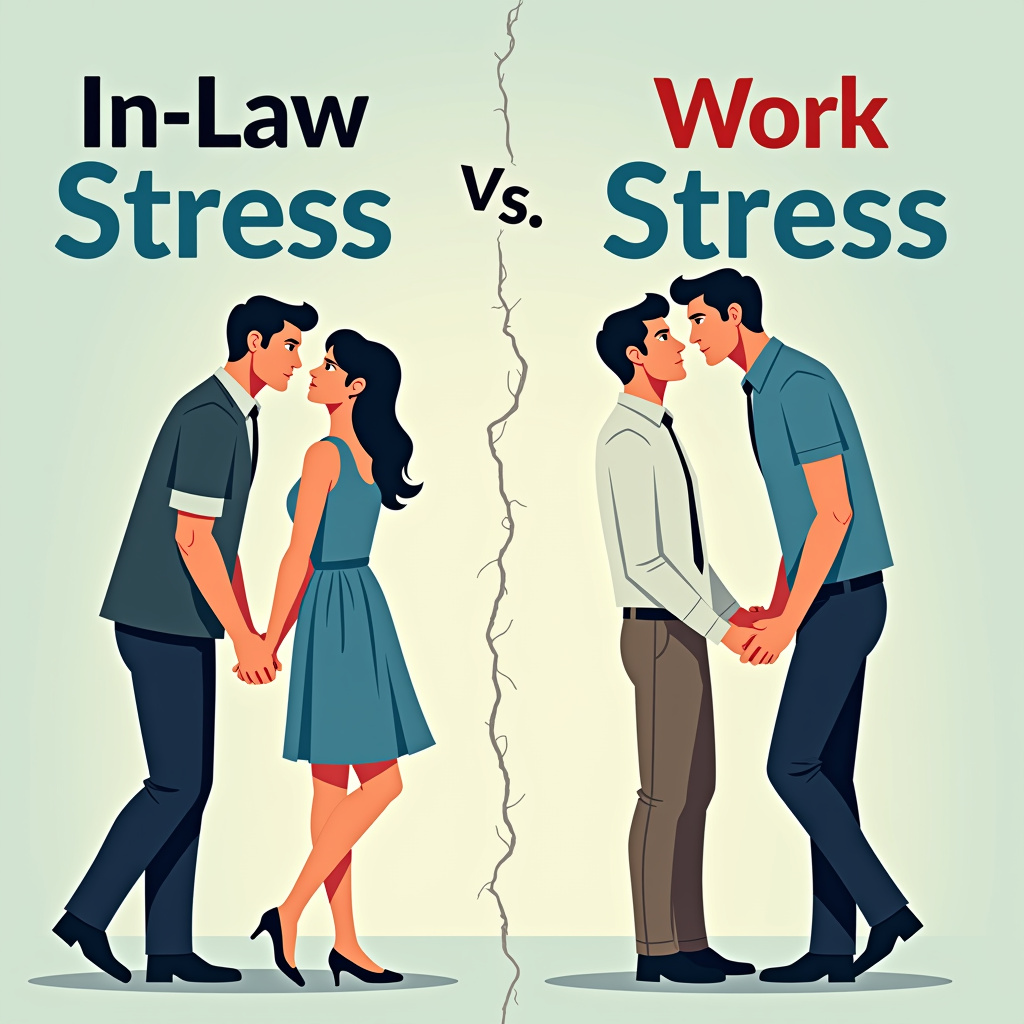
1. Impact on Intimacy and Connection
| Criterion | In-Law Stress | Work Stress |
|---|---|---|
| Core Mechanism | External intrusion leading to defensiveness and triangulation. | Internal depletion leading to fatigue and distraction. |
| Intimacy Impact | Can create loyalty conflicts where one partner feels forced to choose sides, leading to resentment. | Leads to "empty tank syndrome," where there is no emotional energy left for connection or affection. |
| Communication | Arguments often center on who is right regarding family expectations. | Arguments often center on time allocation or the partner’s inattentiveness due to exhaustion. |
2. Frequency and Predictability
In-law challenges are often predictable, particularly around major events. This predictability, while annoying, allows for proactive planning. For example, couples can use holiday relationship advice strategies well in advance of Thanksgiving. Work stress, however, can be unpredictable—a sudden layoff, an unexpected promotion requiring extensive travel, or a volatile boss can disrupt the relationship with little warning.
3. Level of External Control
In-law stress involves managing external individuals whose behavior is largely outside the couple's direct control. The couple’s power lies only in boundary setting. Work stress, while influenced by corporate culture, often involves factors the partner can control, such as setting clearer work hours or delegating tasks. This difference in locus of control significantly affects the couple's sense of agency.
Pricing and Value Analysis: The Cost of Unmanaged Stress
The "price" of these stressors isn't monetary, but rather the long-term cost to the marriage's emotional capital.
The Cost of In-Law Stress

The cost here is often paid in resentment. If boundaries are not enforced, one partner may feel their spouse is not adequately protecting the marriage, leading to chronic dissatisfaction. The value derived from resolving this stress is security and solidarity. Effective managing in-law relationship stress confirms that the couple is a united front.
The Cost of Work Stress
The cost of unmanaged work stress is often missed opportunities for connection. It means constantly postponing date nights, forgetting important anniversaries, or failing to be present during critical conversations. The value derived from managing this is presence and emotional availability. Learning staying connected during stressful work periods is paramount to preventing slow drift.
Best Use Cases: When to Prioritize Which Issue
Deciding which stressor to tackle first requires an honest assessment of the current marital climate.
Prioritize In-Law Management When:
- Boundaries are actively being crossed: If a parent regularly undermines parental decisions or shows up unannounced, this external threat requires immediate, unified action.
- Spousal Loyalty is in Question: If conflicts consistently lead one partner to feel unsupported against their family of origin, the core partnership is compromised. This is a time to revisit effective communication in marriage regarding unified presentation.
- Holidays are consistently miserable: If seasonal gatherings are viewed with dread rather than anticipation, specialized holiday relationship advice and boundary reinforcement is necessary.
Prioritize Work Stress Management When:
- Emotional Exhaustion is Chronic: If one or both partners consistently lack the energy for basic relationship maintenance (e.g., refusing to discuss anything non-logistical after 8 PM), the reservoir is empty.
- Work Leaks into Personal Time Excessively: This includes answering emails during dinner, taking calls during family outings, or frequently canceling plans due to "emergencies."
- You Are Seeking New Beginnings: If you are looking ahead, perhaps planning for the new year, this is the ideal time to implement new dating advice for the new year structure that protects time away from work demands.

Pros and Cons Summary
| Factor | In-Law Stress (Pros/Cons) | Work Stress (Pros/Cons) |
|---|---|---|
| Pros of Managing | Creates a strong, unified couple identity; reduces cyclical conflict. | Frees up emotional energy; improves mental health overall. |
| Cons of Ignoring | Leads to deep-seated resentment; can cause triangulation and infidelity risk. | Leads to slow emotional disconnection; partner feels secondary to career. |
| Control Level | Low control over in-laws; high control over boundaries. | High control over work habits (if senior enough); moderate control over workload. |
The Final Verdict: Which Threatens Marriage More?
It is impossible to definitively state that one stressor is universally worse than the other, as the impact depends entirely on the couple’s existing strengths and weaknesses. However, we can offer guidance based on the nature of the threat:
In-Law Stress is generally more corrosive to trust and loyalty if left unaddressed. It creates an active, external enemy that forces the couple to defend their partnership against intrusion. Failure to manage this results in deep, unforgiving scars related to feeling unsupported.
Work Stress is generally more corrosive to presence and connection over time. It is a slow, insidious drain that starves the relationship of oxygen. While less dramatic than in-law conflicts, chronic work stress often leads couples to realize they have simply grown apart due to lack of shared experience.
For couples seeking immediate repair, addressing the stressor that causes the most frequent, high-intensity arguments should be the priority. If in-law visits trigger explosive fights, focus there first. If the underlying issue is that you never truly see each other anymore because of career demands, then the focus must shift to staying connected during stressful work periods through intentional scheduling and communication.
Ultimately, both require robust effective communication in marriage. A couple that can openly discuss boundaries with in-laws and honestly negotiate work-life balance is equipped to handle both threats successfully.

