

Staying Connected 101: Surviving Stressful Work Periods
Life often presents us with seasons of intense professional demand. Whether you are launching a major project, facing a tight deadline, or navigating a career transition, these periods can strain even the strongest personal relationships. This guide is designed to offer practical, foundational advice on staying connected during stressful work periods, ensuring that professional success doesn't come at the expense of your personal well-being and partnership.
We understand that when work ramps up, the first things to slip are often quality time and deep conversations. If you are feeling overwhelmed by the balancing act between your career and your personal life, you are not alone. This beginner’s guide will break down the fundamentals of maintaining intimacy and partnership strength when time is your scarcest resource.
What is "Staying Connected" During Stressful Times? (The Basics)
In simple terms, staying connected during stressful work periods means intentionally prioritizing your relationship so that external pressures don't create an emotional chasm between you and your partner. It is not about finding extra hours in the day; it is about maximizing the quality of the minutes you do have together.
Think of your relationship like a rechargeable battery. When work is stressful, it drains that battery very quickly. Staying connected is the act of plugging the battery in for a quick, meaningful charge, even if you only have five minutes to spare. It requires conscious effort, especially when you feel too exhausted to make the effort.
Why This Matters for Beginners
If you are new to managing high-stress work cycles, understanding the importance of connection early on is crucial. Ignoring relationship needs during busy times leads to predictable negative outcomes.
Preventing Relationship Drift
When communication stops, assumptions rush in to fill the void. If your partner doesn't know why you are distant, they might assume you are angry, uninterested, or that something is wrong with the relationship itself. This misunderstanding is often the precursor to serious issues later on.
Building Resilience for Future Stress

Every successful navigation of a stressful period builds your relationship's "muscle memory." By practicing connection now, you are building a stronger foundation that will help you handle unexpected future crises—whether they are work-related or involve family dynamics, such as managing in-law relationship stress.
Essential Terminology Explained
To discuss connection effectively, let’s define a few key concepts that will be vital for your success:
- Intentionality: This means deciding before the stress hits what you will do to connect, rather than waiting until you collapse on the couch at 10 PM and hoping something good happens spontaneously. It is proactive, not reactive.
- Micro-Moments: These are very short bursts of quality time (3 to 10 minutes) that are fully present and focused. They are the lifeline when long dates are impossible.
- Emotional Check-In: A brief, structured exchange where you ask about feelings rather than just logistics ("How are you feeling about this week?" versus "Did you remember to call the plumber?"). This is a cornerstone of effective communication in marriage.
Getting Started: Your First Steps to Connection
You don't need grand gestures; you need reliable, small habits. Here are three foundational steps to implement immediately when stress levels rise.
Step 1: The Five-Minute Download (The Daily Ritual)
Schedule one specific, non-negotiable five-minute window each day for a "Download." This is not for problem-solving or discussing chores.
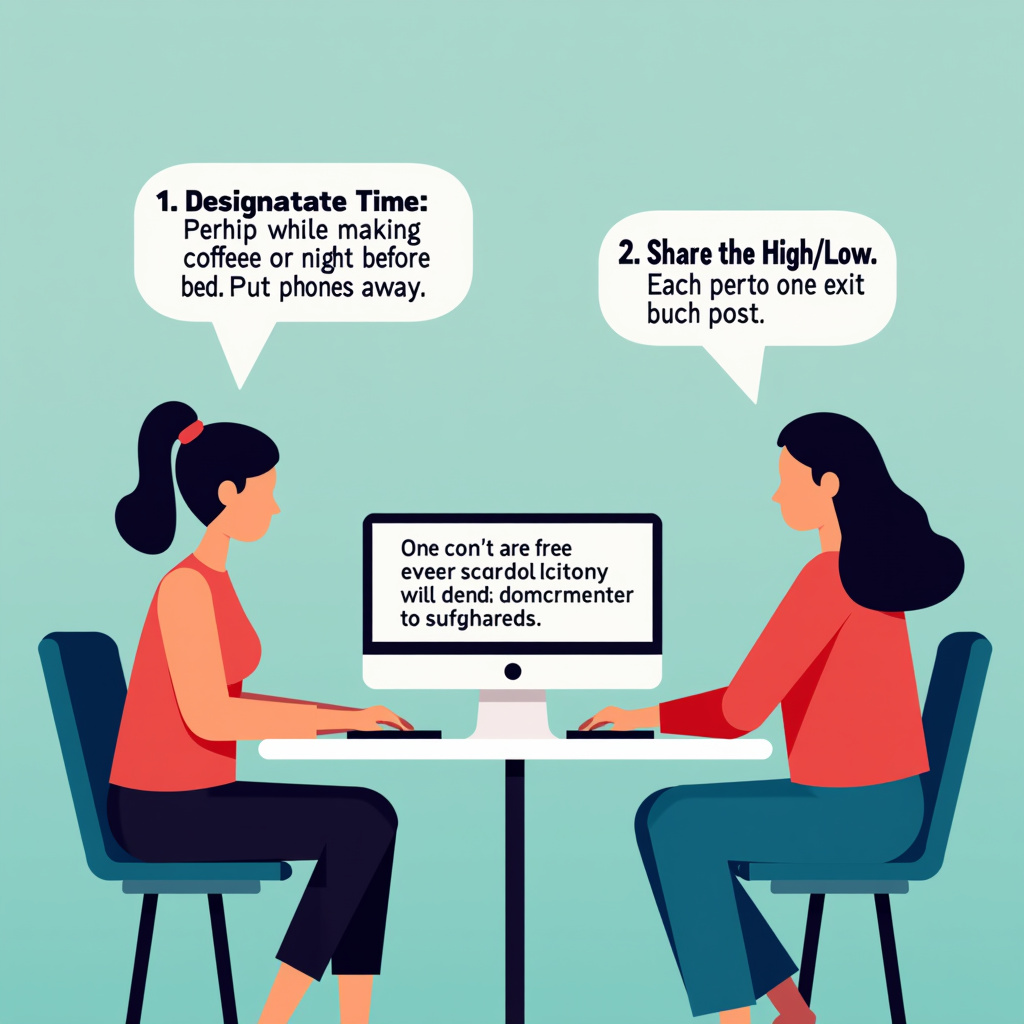
- Designate Time: Perhaps while making morning coffee or right before bed. Put phones away.
- Share the High/Low: Each person shares one positive thing (High) and one challenging thing (Low) about their day.
- Listen Actively: The listener’s only job is to nod, maintain eye contact, and validate ("That sounds really hard," or "I’m so glad that went well for you").
This simple ritual prevents the feeling that you are living parallel lives.
Step 2: Pre-Emptive Communication (Managing Expectations)
Stressful work periods often trigger anxiety in partners. Combat this by communicating your schedule before it becomes a problem.
- Set Boundaries: If you know you will be unavailable from 7 PM to midnight for the next three days, tell your partner clearly: "I need deep focus for the next few nights, but I promise to be fully present starting Thursday evening."
- Schedule Connection: Instead of saying, "Let's hang out soon," say, "I can’t do dinner this week, but can we commit to watching one episode of that show together next Tuesday at 8 PM?" This shows commitment.
Step 3: Physical Reassurance
When words fail due to fatigue, physical touch remains a powerful connector. These are low-effort ways to signal safety and affection.
- The Six-Second Kiss: When leaving or returning home, aim for a kiss that lasts at least six seconds. This is long enough to move beyond a quick peck and actually feel connected.
- Non-Demand Touch: Offer a shoulder rub while your partner is working, or hold hands while walking to the car. This touch communicates, "I see you, and I care about you," without requiring a deep conversation.
Common Beginner Mistakes to Avoid
Even with the best intentions, beginners often stumble. Recognizing these pitfalls can save you significant relationship repair down the line.
Mistake 1: "Venting" Without Permission
When you are stressed, you might dump all your work frustrations onto your partner immediately upon walking in the door. While talking is necessary, dumping can overwhelm your partner, especially if they need a moment to decompress themselves. Always ask first: "I had a brutal day. Do you have the capacity right now for me to vent for five minutes, or would you rather we just order takeout and relax?"

Mistake 2: Assuming Distance Means Disinterest
When one partner is deep in work mode, it is easy for the other to interpret quietness or distraction as the signs your partner is pulling away. They might start seeking comfort or attention elsewhere (sometimes leading to relationship insecurity). Counter this by explicitly stating, "I am focused on this deadline, but I love you, and I am thinking of you."
Mistake 3: Forgetting the Future (Especially Relevant for Dating Advice)
If you are in a newer relationship, stress can make you retreat entirely. Those starting out need to remember that stress is temporary, but relationship habits are permanent. If you are looking for dating advice for the new year, remember that showing up reliably during a tough time proves you are a dependable partner, which is far more attractive than perpetual ease. Don't let stress halt all forward momentum.
Next Steps for Continued Growth
Once you have mastered the daily check-in and expectation setting, you can deepen your relational skills.
- Learn Repair Skills: Stress will inevitably lead to small arguments. Research basic conflict resolution techniques, focusing on apologizing sincerely and quickly moving toward solutions rather than assigning blame.
- Schedule "Non-Work" Time: Even if it’s only 30 minutes on a Sunday morning, dedicate time where no discussion of work, finances, or shared responsibilities is allowed. This protects your shared identity outside of your roles as providers or managers.
- Seek External Support: If the stress feels too heavy, or if you find yourself consistently failing to connect, consider speaking with a relationship counselor. They provide objective tools for effective communication in marriage and can help navigate complex issues like balancing work demands with family obligations, including extended family concerns like managing in-law relationship stress.
Conclusion: Connection is Your Anchor
Surviving stressful work periods is less about eliminating stress and more about insulating your most important relationships from its fallout. By being intentional with micro-moments, communicating openly about your capacity, and prioritizing physical reassurance, you build a strong anchor that holds steady even when the professional seas get rough. Remember, success at work is meaningful when you have someone meaningful to share it with. Start small today—that five-minute download is the most important meeting you’ll have all day.

