

Pro Tips: How to Manage In-Law Stress Better Now
Navigating the dynamics of extended family can be one of the most significant sources of friction in a partnership. Mastering managing in-law relationship stress is crucial not just for holiday survival, but for the long-term health and stability of your marriage. When external pressures—like parental expectations or differing traditions—mount, it can inadvertently erode the core connection between you and your spouse. This article provides a professional, actionable toolkit designed to help you implement immediate changes, strengthen your partnership against external strain, and foster enduring domestic harmony.
Quick-Win Tips: Immediate Stress Reduction
These tips offer immediate relief and can be implemented within the next 24 hours to lower the ambient stress levels surrounding in-law interactions.
1. Establish the "Unified Front" Rule Immediately
Why It Works: In-law stress often thrives in ambiguity. When one partner publicly contradicts the other regarding boundaries, it signals weakness and invites further boundary testing from the in-laws. A unified front sends a clear, consistent message.
How to Implement It: Before any interaction (a phone call, a visit, a holiday dinner), spend five minutes confirming your joint position on key topics (e.g., "We are not discussing future career moves," or "We will leave by 9 PM"). If a difficult topic arises during the interaction, use pre-approved, neutral phrases like, "That's something [Spouse's Name] and I have already discussed and agreed upon."
Expected Results/Benefits: Reduced triangulation, less emotional exhaustion during interactions, and a clear demonstration of marital partnership strength.
Pro Tip: If your spouse deviates during the event, address it privately later with curiosity, not accusation: "I noticed you seemed uncomfortable when we talked about X. What was going through your mind?"
2. Schedule 15 Minutes of "No In-Law Talk" Daily

Why It Works: Stress builds when the topic of difficult relatives dominates all available conversation time. This dedicated window prevents the issue from bleeding into every conversation, which is critical for effective communication in marriage.
How to Implement It: Set a timer for 15 minutes each evening. During this time, you are allowed to vent, strategize, or complain about in-law issues. Once the timer goes off, the topic is officially closed for the day. Use the remaining evening time to discuss positive topics, logistics, or reconnection activities.
Expected Results/Benefits: Prevents resentment buildup and ensures that in-law stress doesn't eclipse the positive aspects of your relationship.
Impact Tips: Strengthening Marital Foundations
These strategies focus on reinforcing the relationship itself, making it more resilient when external pressures are high.
3. Define and Document Your Boundary Script
Why It Works: Vague boundaries lead to inconsistent enforcement. A pre-written script gives you the exact language needed during moments of high stress, reducing the need for on-the-spot conflict resolution. This is central to managing in-law relationship stress successfully.
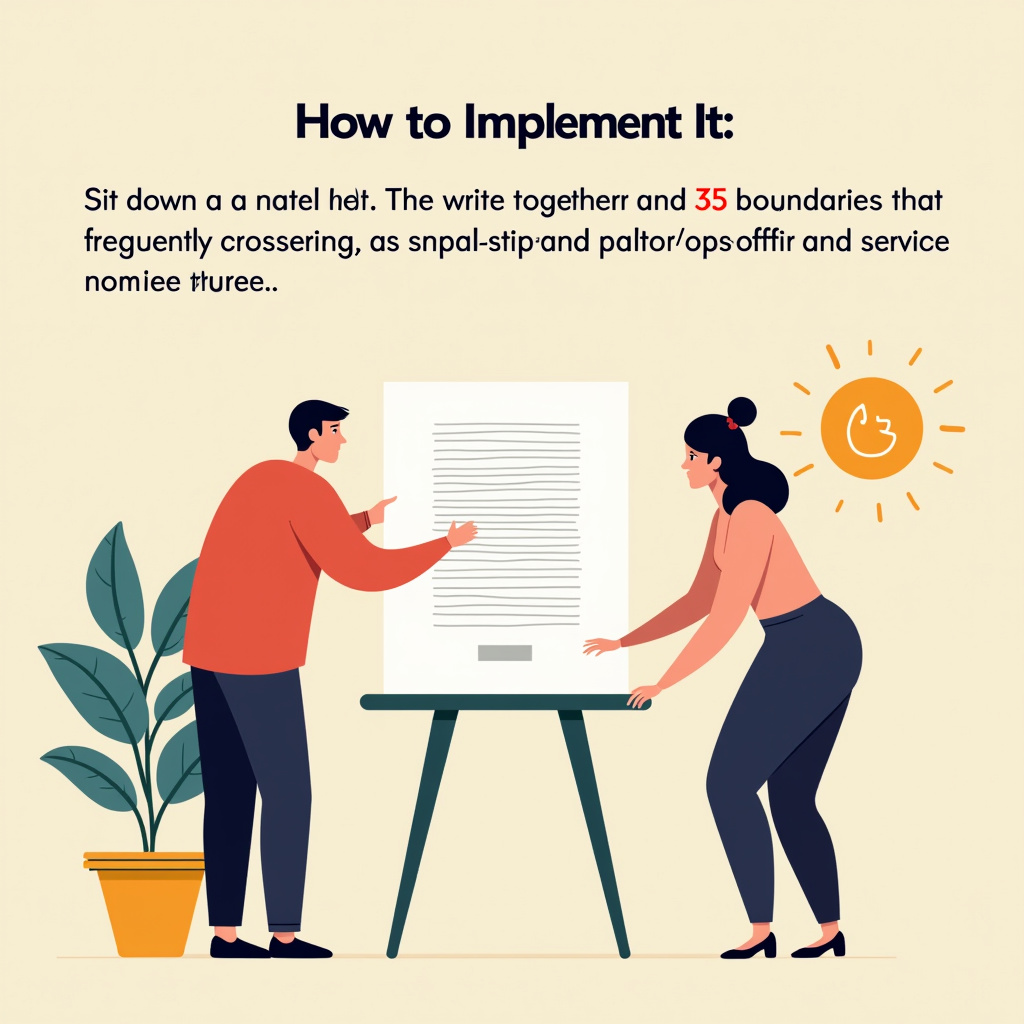
How to Implement It: Sit down together and write down 3-5 boundaries that are frequently crossed (e.g., unsolicited parenting advice, drop-in visits). For each boundary, draft the exact sentence your spouse will use to enforce it. Example Boundary: Unannounced Visits. Script: "Thank you for stopping by, but we need to keep our schedule clear today. Let’s plan a specific time for next week."
Expected Results/Benefits: Faster de-escalation of conflict. When the script is used, it feels less personal and more procedural, protecting feelings while maintaining the line.
Pro Tip: Practice saying the script out loud to your spouse when you are calm. This builds muscle memory for when you are emotionally triggered.
4. Identify and Counteract Signs Your Partner is Pulling Away
Why It Works: Stress—especially relationship stress—often causes partners to retreat defensively. Recognizing the early signs your partner is pulling away allows you to intervene proactively rather than waiting for a major blow-up.
How to Implement It: Agree on three subtle behavioral changes that indicate your spouse is shutting down (e.g., shorter texts, avoiding eye contact during conversations about family, increased screen time). When you notice one of these signs, initiate a low-pressure check-in focused solely on connection, not problem-solving. Example Check-in: "I noticed you’ve been quiet lately. I’m not asking about the in-laws right now, but I want to check in on you. How are you genuinely feeling this week?"
Expected Results/Benefits: Prevents emotional distance from solidifying, ensuring that in-law stress acts as a catalyst for connection rather than isolation.
Advanced & Pro-Level Strategies
These tips require slightly more commitment but yield profound, lasting improvements in partnership resilience.
5. Implement "Stress Budgeting" for Visits
Why It Works: Over-scheduling or under-preparing for high-stress events depletes emotional reserves. Budgeting treats time and energy as finite resources. This is crucial for staying connected during stressful work periods and family obligations.
How to Implement It: Assign a specific "stress budget" (e.g., 10 points out of 100 available for the weekend) to planned events. A large holiday dinner might cost 40 points, while a casual Sunday lunch costs 15. Agree beforehand that once the budget is spent, you are permitted to leave early, skip the next event, or take a mandatory 30-minute "time-out" away from everyone.
Expected Results/Benefits: Reduces the feeling of being trapped or overwhelmed, leading to a more positive memory of the event overall, even if it was challenging.
6. Schedule Intentional "Re-Entry Dating"
Why It Works: After periods of intense in-law management or stressful work demands, couples often fall into the trap of simply co-existing rather than actively connecting. This is where dating advice for the new year becomes relevant year-round—you must consciously reinvest in romance.
How to Implement It: After a high-stress family event, schedule a date night within 72 hours that explicitly excludes any discussion of family obligations. The goal is to remember why you chose each other. This is not about solving problems; it’s about reinforcing the primary relationship.
Expected Results/Benefits: Re-centers the marriage as the primary unit, reminding both partners that their bond is the foundation that supports navigating external challenges.
Conclusion: Making the Shift Permanent
Successfully managing in-law relationship stress is not about eliminating the in-laws; it’s about optimizing your partnership’s response system. The key to making these changes stick is consistency, not perfection.
Start small. Choose one Quick-Win Tip (like the Unified Front Rule) and commit to practicing it perfectly for one week. Then, integrate one Impact Tip (like defining your Boundary Script). By taking these deliberate, actionable steps, you move from reacting defensively to proactively safeguarding your marriage against external pressures. Strong communication and clear boundaries built during stressful times become the default setting for your relationship moving forward.