
Spotting Pulling Away vs. Work Stress: A Complete Comparison
Navigating relationship challenges requires clarity, especially when the source of tension is ambiguous. Distinguishing between signs your partner is pulling away due to deeper relational issues and temporary strain caused by professional demands is crucial for timely and appropriate intervention. This comprehensive comparison is designed for couples seeking to accurately diagnose the root cause of recent emotional distance, providing frameworks for understanding both relationship drift and the impact of external pressures like demanding careers or navigating complex family dynamics.
Introduction: Diagnosing the Disconnect
In modern relationships, couples frequently face periods where intimacy wanes or communication falters. For many, the immediate assumption is that a fundamental shift in commitment is occurring—that their partner is emotionally withdrawing. However, often the culprit is acute, high-pressure work periods, or perhaps the ongoing complexity of managing in-law relationship stress. This article dissects the subtle yet significant differences between genuine emotional detachment and stress-induced distance, offering actionable insights for couples struggling to stay connected. We will examine the hallmarks of each scenario to help you determine whether you need a relationship intervention or simply better strategies for staying connected during stressful work periods.
Overview of Option 1: Signs Your Partner is Pulling Away
When a partner is emotionally withdrawing, the behavior is typically characterized by a consistent, proactive reduction in investment in the shared relationship narrative. This isn't about being tired after a long day; it’s about a shift in core priorities and connection mechanisms.
Key Indicators of Relationship Withdrawal
Emotional pulling away often manifests through changes in how the couple interacts daily:
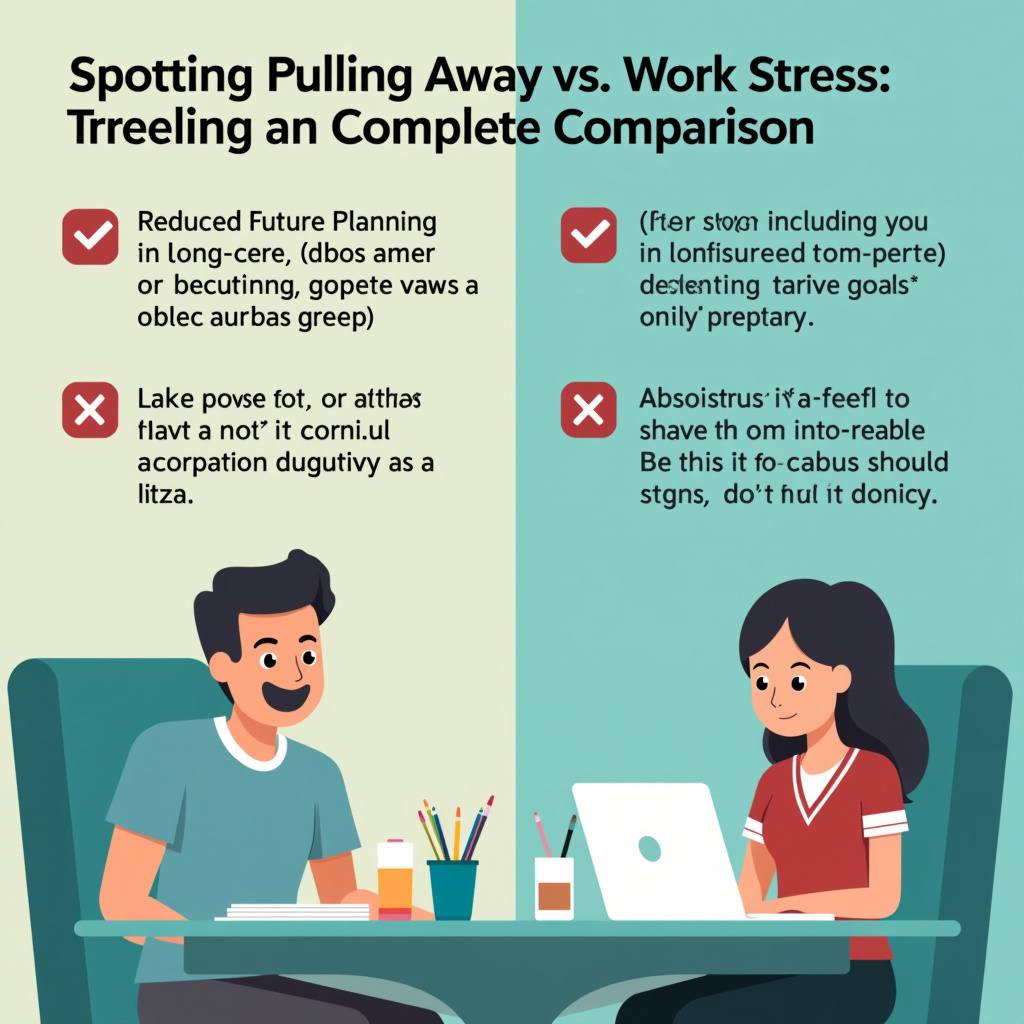
- Reduced Future Planning: They stop including you in long-term discussions or become vague about shared goals (e.g., vacations, financial milestones).
- Increased Secrecy: There is a noticeable increase in privacy regarding their digital life or time management, without a clear, external justification (like a new, demanding project).
- Emotional Stonewalling: They consistently shut down conversations about the relationship itself, labeling discussions as "too much drama" or "unnecessary stress."
- Decreased Affection and Intimacy: Physical touch becomes rare, and emotional vulnerability disappears, replaced by superficial engagement.
This pattern suggests a growing internal decision to create distance, making effective communication in marriage paramount to uncover the underlying dissatisfaction.
Overview of Option 2: Work Stress or External Pressure
Work stress, or pressure stemming from external obligations (like caring for aging parents or navigating difficult family dynamics), often results in a partner being physically present but mentally depleted. The distance is a byproduct of finite energy reserves, not a desire to leave the relationship.
Key Indicators of Stress-Induced Distance
When stress is the primary driver, the distance is usually accompanied by specific behavioral markers:
- Exhaustion and Irritability: The partner is visibly drained, often expressing frustration specifically related to their job or external obligations.
- Transactional Communication: Conversations revolve solely around logistics (who picks up the kids, what’s for dinner) rather than deep sharing.
- Temporary Fixations: The partner may be intensely focused on solving a specific work crisis, with the expectation that things will normalize once the project concludes.
- Guilt or Apology: Often, a stressed partner will apologize for their unavailability or irritability, acknowledging the impact on the relationship, even if they can’t immediately change the situation.
This scenario demands strategies focused on support and boundary setting, rather than relationship reconstruction.
Feature-by-Feature Comparison: Withdrawal vs. Workload
To help differentiate between the two, we compare the core characteristics across several critical relationship dimensions.
| Criterion | Signs Your Partner is Pulling Away (Withdrawal) | Work Stress/External Pressure |
|---|---|---|
| Focus of Complaints | Directed inward toward the relationship dynamic itself. | Directed outward toward external stressors (boss, deadlines, in-laws). |
| Reaction to Connection Attempts | Defensive, dismissive, or uninterested in deeper engagement. | Tired, distracted, but often appreciative of support or light connection. |
| Consistency | Persistent, growing over weeks or months without major external triggers. | Episodic, peaking during known high-stress cycles (e.g., quarter-end). |
| Emotional Investment | Low engagement; seems like they are checking out of the partnership. | High energy directed elsewhere; energy reserves are depleted. |
| Communication About the Future | Ambiguous, avoiding commitments, or expressing doubt about the future together. | Focused on immediate survival, with future planning paused until the crisis passes. |
Pricing and Value Analysis: The Cost of Misdiagnosis
Misdiagnosing the issue carries a significant "cost." If you mistake stress for withdrawal, you might initiate a difficult conversation about commitment (high emotional cost) when what was needed was empathy and space. Conversely, if you attribute withdrawal to stress, you might offer endless support while the relationship erodes from neglect.
Cost of Misdiagnosing Withdrawal as Stress:
- Value Lost: Time spent trying to "fix" a work problem that isn't the core issue.
- Risk: Escalating the actual withdrawal by failing to address the root relational dissatisfaction.
Cost of Misdiagnosing Stress as Withdrawal:
- Value Lost: Unnecessary emotional strain, arguments about commitment when none is warranted.
- Risk: Pushing an already exhausted partner further away by demanding emotional labor they cannot provide.
Understanding the context is key, especially when dealing with complex issues like managing in-law relationship stress, which can look like pulling away but is actually boundary fatigue.
Best Use Cases for Each Diagnosis
Knowing when to apply specific strategies based on your diagnosis is crucial for relationship health.
Use Cases for Addressing Withdrawal
If you identify consistent signs your partner is pulling away, the focus must shift to relational repair:
- Scheduled Deep Check-ins: Implement weekly, non-confrontational talks dedicated solely to feelings and connection, not logistics.
- Revisiting Shared Values: Re-engage with the core reasons you chose each other, perhaps through couple’s counseling.
- **Prioritizing Effective Communication in Marriage: Focus on "I" statements and active listening, ensuring your partner feels heard without becoming defensive.

Use Cases for Addressing Work Stress
If the distance is clearly tied to external pressures, the focus should be on support and protection:
- Creating "No-Work Zones": Designate specific times (like dinner or date night) where work talk is strictly forbidden to ensure protected connection time.
- Practical Support: Offer tangible help (e.g., handling errands, managing household admin) to free up their limited mental bandwidth.
- Low-Demand Connection: Focus on light, easy ways to connect—watching a movie together, short walks—rather than intense emotional sharing. This is crucial for staying connected during stressful work periods.
Final Recommendations and Guidance
Deciding whether your partner is emotionally detaching or simply overwhelmed requires honest self-assessment and, ideally, gentle inquiry.
If you are approaching the new year, this period often brings renewed resolutions. If you are focusing on dating advice for the new year, remember that this principle applies even within established relationships: date your partner by understanding their current needs.
Guidance Checklist:
- Observe the Trigger: Does the distance correlate directly with known high-stress cycles (work deadlines, family crises)? If yes, lean toward stress diagnosis.
- Assess the Language: Is the frustration directed at external factors, or is it aimed at the relationship structure?
- Test the Waters: Gently suggest a low-stakes, shared activity. A stressed partner might accept a quiet evening; a withdrawing partner might decline entirely or turn the activity into a discussion about their unavailability.
Ultimately, if the distance persists long after the external crisis has passed, or if your attempts at effective communication in marriage are met with consistent avoidance, the likelihood that you are dealing with true emotional withdrawal increases. In such cases, professional guidance is strongly recommended before the gap becomes insurmountable.