

Top 5 Communication Shifts for Dating & In-Law Stress
The foundation of any strong relationship—whether navigating the early stages of dating or managing the long-term complexities of marriage—rests squarely on effective communication in marriage. When life introduces external pressures, such as demanding careers or navigating complex family dynamics, these foundational communication skills are often the first things to erode. Understanding how and when to talk about difficult subjects can mean the difference between growing closer or drifting apart. This list outlines five crucial communication shifts necessary to handle the inevitable stresses of modern relationships, from setting boundaries with extended family to staying connected during stressful work periods.
1. Shift from Reacting to Responding During Conflict
When stress levels rise, our default setting often shifts to defensiveness or immediate counter-attack. This reactive pattern escalates conflict rather than resolving it. True resolution requires creating a small, crucial gap between the stimulus (the stressful comment or event) and your reply. This gap allows emotional regulation to occur, transforming a potential fight into a productive discussion.
This shift is vital when dealing with external pressures like family criticism. For instance, if a partner’s parent makes an unsolicited comment about your finances, the reactive response is an immediate defense or an attack on the in-law. A thoughtful response acknowledges the feeling first. Research consistently shows that validation reduces defensive barriers in both romantic and familial settings.
Actionable Takeaway: Implement the "Five-Second Rule." When you feel the heat of an argument or stressful situation involving family, consciously pause for five seconds before speaking. Use that time to take a deep breath and frame your response using "I" statements that focus on your needs rather than blaming the other person or the external stressor.

2. Proactive Boundary Setting: The Key to Managing In-Law Relationship Stress
Many couples struggle not with their bond, but with the intrusion or demands of extended family. Addressing these issues only when a crisis erupts is ineffective; preemptive boundary setting is essential for managing in-law relationship stress. Boundaries are not walls erected to keep people out; they are guidelines that define how you and your partner wish to be treated, protecting the couple's unit.
Consider the holiday season, a prime time for boundary testing. If you know a certain topic is off-limits or that visits must be a specific length, communicate this clearly before the event occurs, not during the dinner table confrontation. A study published in the Journal of Social and Personal Relationships highlights that couples who jointly agree on and present a united front regarding family boundaries report significantly lower stress levels.
Actionable Takeaway: Schedule a "Family Strategy Session" with your partner. Discuss three non-negotiable boundaries regarding in-laws (e.g., decision-making autonomy, visitation frequency, or topics of conversation). Agree on a unified script—a single, kind, but firm sentence—to deploy when a boundary is tested.
3. Schedule Connection Time: Combating Withdrawal During Peak Stress
When work demands intensify, the first casualty is often quality time. This withdrawal can be misinterpreted, leading to the perception that your partner is emotionally unavailable or that you are experiencing the signs your partner is pulling away. To counteract this, connection must be scheduled and protected with the same rigor as a critical business meeting.
If one partner is working 70-hour weeks, the other partner might feel lonely or unimportant. Instead of waiting for a free moment that never arrives, institute a non-negotiable 15-minute "Decompression Check-In" every evening, technology-free. This time isn't for logistics or problem-solving; it’s purely for emotional presence.

Actionable Takeaway: Implement "Micro-Moments of Connection." Beyond the scheduled check-in, identify three small opportunities daily to physically or verbally reconnect—a lingering hug before leaving, sending a supportive meme during the workday, or explicitly stating, "I’m thinking of you." This consistency signals commitment even when schedules diverge.
4. Translate Intentions When Staying Connected During Stressful Work Periods
Stress clouds interpretation. When a partner is under intense professional pressure, their communication style might become clipped, brief, or overly focused on tasks. Without context, the receiving partner might wrongly assume the brevity signals disinterest or anger. The shift here involves vocalizing the intent behind the communication style.
For example, a partner might send a one-word text update: "Done." The receiving partner might internalize this as coldness. A better approach, if one partner knows they will be brief due to stress, is to preface the communication: "Heads up, I have three major deadlines today, so my texts will be short, but know that I’m focused on getting through this so we can reconnect later."
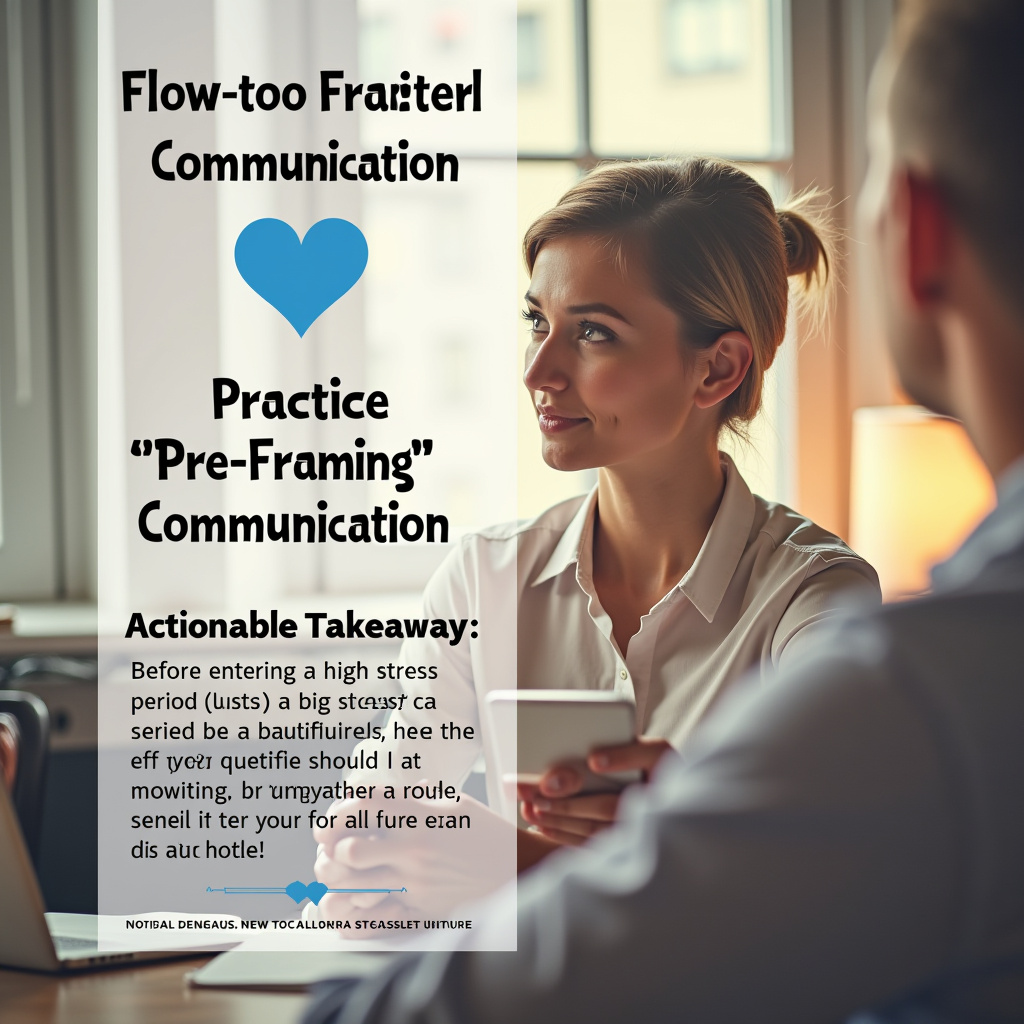
Actionable Takeaway: Practice "Pre-Framing Communication." Before entering a high-stress period (a big project, a family crisis), tell your partner what your communication style will look like and what it will not mean. This preemptive clarification prevents misinterpretation of effective communication in marriage during challenging times.
5. Adopt "Future-Focused" Language in Early Dating
For those engaging in new relationships, the stressor is often uncertainty. How do you discuss expectations without seeming demanding? The key is shifting from present-tense evaluation ("I don't like that you didn't call yesterday") to future-focused goal setting. This makes conversations feel collaborative rather than critical, which is excellent dating advice for the new year.
When navigating early relationship compatibility, avoid framing discussions around past mistakes. Instead of saying, "You always show up late," try, "For us to build a successful future together, punctuality for our scheduled dates is important to me. Can we prioritize that moving forward?" This frames the discussion around a shared future vision.
Actionable Takeaway: When discussing a recurring issue in a new relationship, rephrase the concern as a shared goal. Instead of debating who is right or wrong about a past event, articulate what the ideal future interaction looks like: "What can we commit to doing differently next time so we both feel respected?"
Conclusion: Communication as Proactive Maintenance
Stress is inevitable, whether stemming from external demands or internal relationship friction. The five communication shifts outlined above—moving from reaction to response, proactively setting boundaries to manage in-law stress, scheduling connection, pre-framing communication during work pressures, and adopting a future focus in dating—are not fixes for relationship failure, but rather tools for proactive maintenance. By consciously adjusting how we communicate, we ensure that external pressures strengthen our relational bonds rather than serving as the catalyst for distance. Mastering effective communication in marriage and partnership requires consistent effort, but the payoff is a resilient, connected relationship capable of weathering any storm.

