

Top 5 Connection Hacks for Holiday Stress & In-Laws
The holiday season, often marketed as a time of warmth and togetherness, frequently brings an undercurrent of intense pressure. Between heightened social expectations, financial strain, and the inevitable merging of extended families, maintaining strong relational bonds can feel like an Olympic sport. For many, navigating these dynamics requires proactive strategies, especially when it comes to holiday relationship advice. This listicle provides five actionable, professional connection hacks designed to help couples and families thrive, not just survive, the most demanding time of the year.
1. Establish a "No-Complaint Zone" Boundary
One of the quickest ways to erode connection, particularly when dealing with extended family, is through constant venting and shared negativity. While venting can sometimes feel necessary, when it becomes the primary mode of interaction, it drains relational energy. This hack focuses on creating designated times or spaces where complaints about specific high-stress topics—like a difficult relative or an overwhelming obligation—are temporarily suspended.
This doesn't mean ignoring problems, but rather compartmentalizing them. For instance, you and your partner might agree that during the actual holiday dinner or while driving to a family event, you will focus solely on positive observation or neutral topics. Data suggests that couples who intentionally practice gratitude or positive reframing during stressful periods report significantly higher relationship satisfaction. This intentional shift prevents temporary stressors from becoming defining features of your interactions.
Actionable Takeaway: Schedule a 30-minute "State of the Union" meeting before the main holiday gathering to discuss logistical concerns and vent frustrations privately. Once that meeting is over, agree to shelve those specific topics until a post-holiday debrief.

2. Implement Structured "Micro-Check-Ins" for Effective Communication in Marriage
During periods of high activity, the deep, meaningful conversations that sustain a partnership often get replaced by transactional discussions ("Did you pack the gifts?" or "What time is the party?"). To combat this erosion of intimacy, institute brief, structured check-ins that force genuine connection. These micro-check-ins should be timed—short enough not to feel like another chore, but long enough to require presence.
A highly effective strategy for effective communication in marriage involves the "3-2-1" method adapted for quick check-ins. When you first see your partner each day during the busy season, ask: 3 things you are looking forward to today, 2 things you are currently worried about (unrelated to logistics), and 1 thing you appreciate about them. This structure ensures you cover both the positive and the vulnerable without letting the conversation spiral into an exhaustive planning session.
Actionable Takeaway: Set an alarm on your phone for 9:00 AM and 9:00 PM each day of peak stress. Use these designated 5-minute windows exclusively for the 3-2-1 check-in, regardless of what else is happening.
3. Define Roles and Responsibilities for Managing In-Law Relationship Stress
The stress stemming from in-laws is often compounded by unclear boundaries and the assumption that one partner will automatically handle all interactions with their side of the family. Proactively defining who manages which interactions is crucial for managing in-law relationship stress and preventing resentment from building between spouses.
This involves mapping out potential conflict zones. For example, if your spouse’s mother always criticizes your cooking, the spouse whose parent it is should be the designated primary communicator or "buffer" for that specific topic. Similarly, if you are hosting, one person might handle all the financial logistics while the other handles all the social scheduling. This shared accountability reduces the burden on one person and presents a united front to external family members.

Actionable Takeaway: Create a simple "In-Law Liaison List." List the three most challenging family members or recurring stressful scenarios, and assign the primary point person for each one. Commit to supporting your partner’s role without undermining their boundary setting.
4. Schedule Non-Negotiable "Recharge Rendezvous"
The holidays, coupled with year-end professional deadlines, often mean that staying connected during stressful work periods is relegated to accidental moments—like grabbing coffee between meetings or collapsing on the couch simultaneously. These accidental moments are rarely restorative. True connection during high-stress times requires scheduling intentional, low-effort breaks that prioritize reconnection over productivity.
These "Recharge Rendezvous" should be sacred time slots where work, family obligations, and logistics are explicitly banned. They don't have to be elaborate dates; sometimes, the most effective rendezvous is simply sitting in silence together, perhaps listening to music or reading side-by-side, ensuring physical proximity without the pressure of performance or conversation. A study by the Gottman Institute emphasizes that couples who maintain bid responsiveness—even small gestures—during stress report significantly lower levels of burnout.
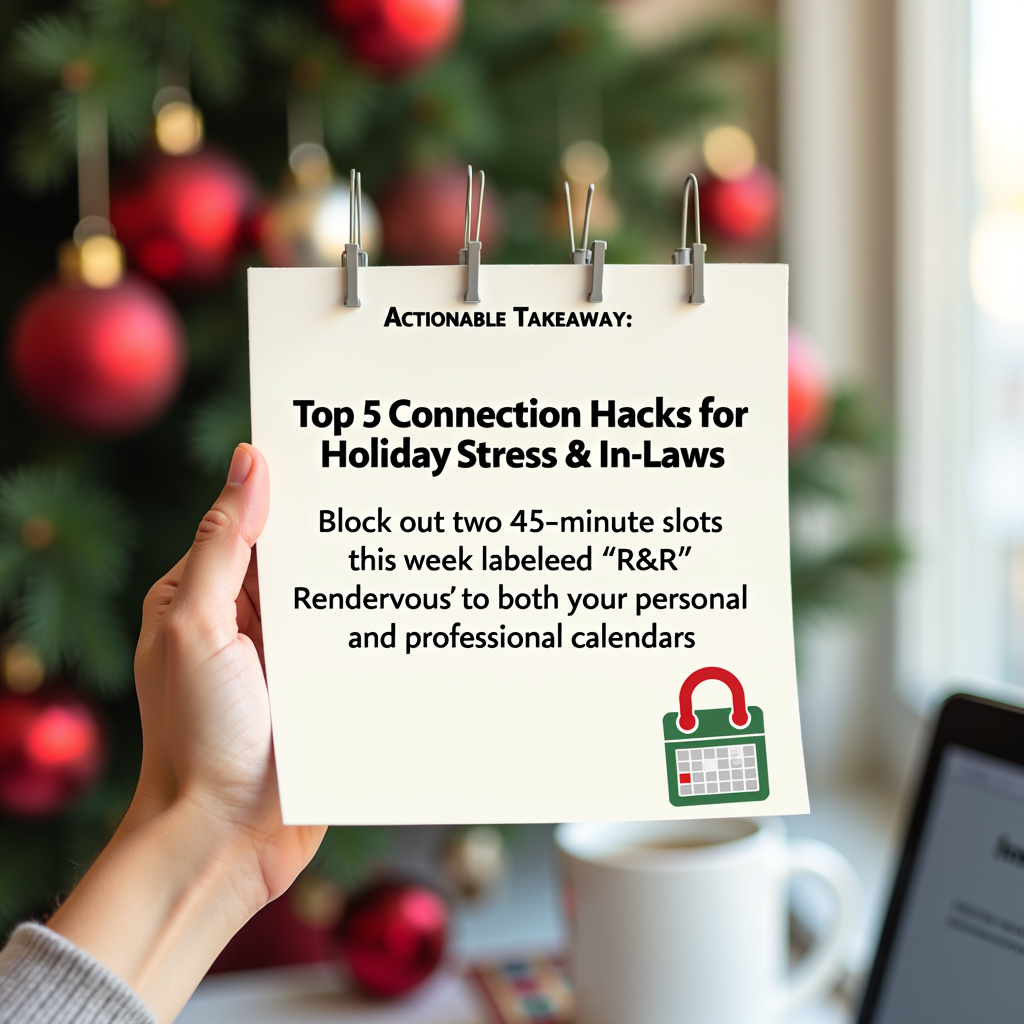
Actionable Takeaway: Block out two 45-minute slots this week labeled "R&R" (Recharge & Rendezvous) in both your personal and professional calendars. Treat these as mandatory client meetings that cannot be rescheduled.
5. Pre-Commit to Post-Holiday "New Year Clarity" Planning
Anticipation of the next phase—the new year—can often feel rushed, leading couples to carry unresolved holiday tensions into January. A key connection hack is to use the end of the holiday season as a dedicated moment for future-focused planning, which shifts the focus from immediate stress to shared goals. This is particularly relevant when considering dating advice for the new year.
By committing to a "New Year Clarity Session," you create a positive endpoint for the current chaotic period. This session should focus on what you want more of in the coming year—more date nights, better financial alignment, or specific shared personal goals. Discussing this now ensures that when the dust settles, you have a roadmap for renewed connection, rather than defaulting to old routines.
Actionable Takeaway: Put a placeholder on your calendar for January 5th titled "2024 Vision Mapping." Agree now that this meeting will be dedicated solely to planning positive future activities, travel, or relationship goals, ensuring the conversation remains optimistic.
Conclusion: Connection as a Proactive Strategy
The pressure cooker of the holiday season tests the resilience of even the strongest relationships. By viewing connection not as something that happens organically, but as a set of skills to be applied proactively, couples can navigate family dynamics and professional demands with greater ease. Implementing these five connection hacks—from establishing complaint zones and utilizing micro-check-ins for effective communication in marriage, to strategically managing in-law relationship stress—allows you to move beyond simply surviving the season. When you commit to holiday relationship advice that is structured and intentional, you ensure that while the external world may be chaotic, your partnership remains a reliable source of calm and strength, setting a positive trajectory for dating advice for the new year and beyond.

