

Top 6 Marriage Communication Tools for In-Law Stress
Navigating the complexities of extended family dynamics is a perennial challenge for couples, often intensifying during holidays or periods of significant life transition. When managing in-law relationships becomes a source of friction, the bedrock of the marriage itself can feel strained. Therefore, mastering effective communication in marriage is not just beneficial—it is essential for buffering against external pressures. This article outlines six powerful, actionable communication tools designed specifically to help couples present a united front, reduce conflict, and successfully navigate managing in-law relationship stress.
1. Establish the "United Front" Protocol
Before any potentially stressful interaction—whether it’s a major family gathering or a sensitive phone call—you and your spouse must agree on your mutual stance. This is the foundational step to avoid triangulation, where one partner feels forced to choose sides. A united front means presenting a single, consistent message to your in-laws, regardless of who initiated the boundary or topic.
This protocol requires pre-emptive discussion, not reactive defense. For instance, if your spouse’s mother frequently oversteps boundaries regarding your parenting style, you and your spouse need to agree before the next visit on what the acceptable response will be. If one partner feels blindsided or undermined in the moment, the stress immediately transfers back into the marriage, defeating the purpose of boundary setting.
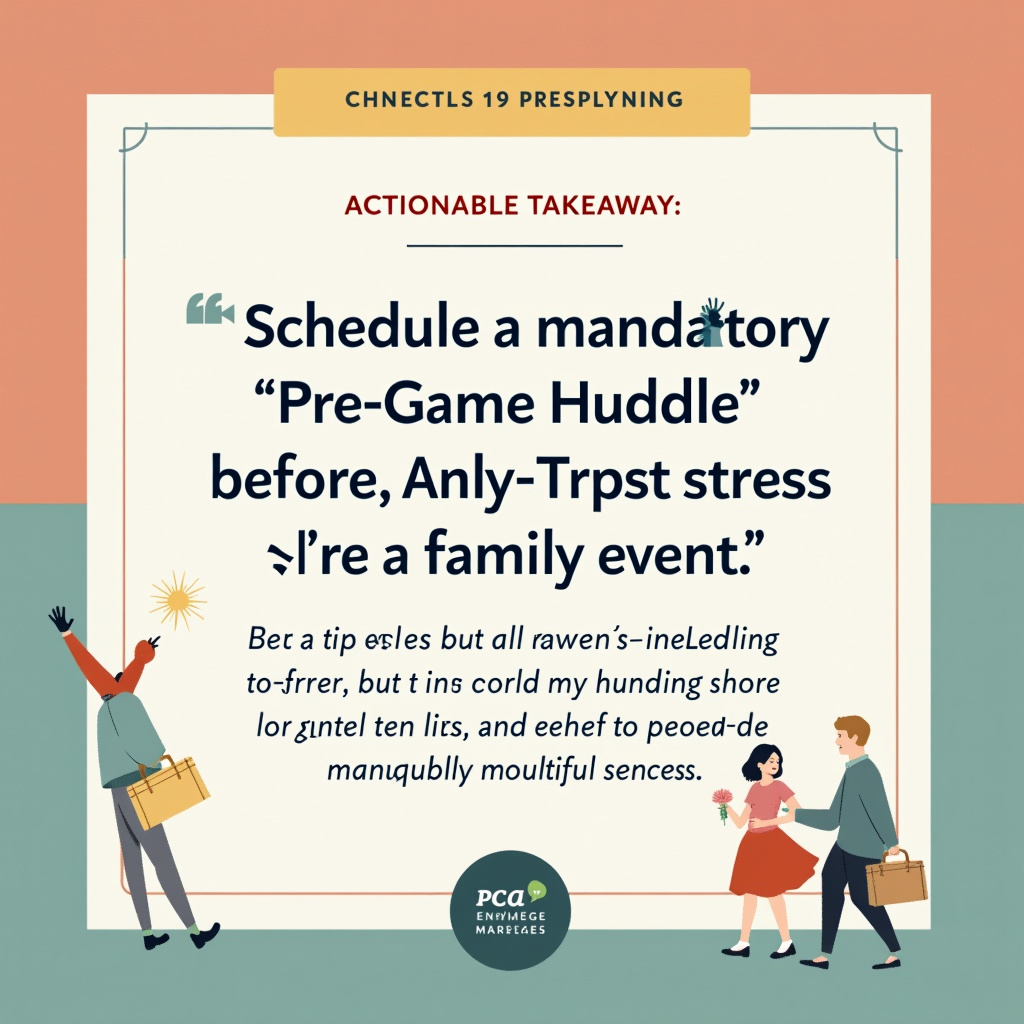
Actionable Takeaway: Schedule a mandatory 15-minute "Pre-Game Huddle" before any high-stress family event. Use this time to confirm roles, anticipated topics, and agreed-upon responses. This proactive step is crucial, especially when seeking holiday relationship advice for navigating seasonal gatherings.
2. Implement the "We" Language Filter
One of the fastest ways to escalate tension during in-law discussions is using "You" statements, which sound accusatory (e.g., "You always let your father criticize our finances"). Instead, shift all dialogue about the external stressor to "We" language, reinforcing the partnership. This linguistic shift moves the focus from individual blame to shared problem-solving.
Data suggests that couples who use collaborative language report higher relationship satisfaction. When you frame the issue as a joint challenge, the in-laws become the external variable, not an internal wedge. For example, instead of saying, "You need to talk to your sister about that comment," try, "How can we address this situation together next time?"
Actionable Takeaway: During any discussion about in-law stress, commit to using the pronoun "we" or "us" at least 80% of the time. This subtly reinforces that you are facing the challenge as a team.
3. Define and Practice "The Pass" Technique
Sometimes, the most effective communication tool is knowing when not to engage. The "Pass" technique allows a spouse to politely signal to their partner that they are emotionally depleted or that the conversation is becoming unproductive, without causing offense to the in-law. This is vital when one partner is simply better equipped to handle a specific relative or topic.
Consider a scenario where your spouse is excellent at deflecting questions about career changes, but you struggle. If your mother-in-law corners you about it, a pre-agreed, subtle signal (like touching your earlobe or using a specific code word) allows your spouse to smoothly intervene. For example, the intervening spouse might say, "That’s a great question! Let me jump in here, as [Partner’s Name] and I were just discussing that earlier."
Actionable Takeaway: Create a non-verbal signal or a neutral code word that means, "I need you to take over this interaction immediately." Practice using it in low-stakes environments first to ensure it feels natural.
4. Schedule Regular "State of the Union" Check-ins
In-law stress often simmers beneath the surface, only erupting during peak conflict. To prevent this, couples need structured, protected time to discuss relationship health, independent of immediate crises. These check-ins are crucial, especially when you are staying connected during stressful work periods that might otherwise leave no room for deeper conversation.
These meetings should follow a simple format: What is going well? What challenges arose this week (including any in-law interactions)? What do we need to change for next week? Crucially, these conversations should be banned from the bedroom or right before bedtime, ensuring they remain focused and solution-oriented rather than emotionally draining.
Actionable Takeaway: Block out 30 minutes every Sunday evening for your "State of the Union." Bring a brief, written agenda to keep the discussion efficient and focused on mutual support.
5. Create Boundaries Scripts for Difficult Topics
Ambiguity is the enemy of boundary setting. When dealing with recurring intrusive behavior from in-laws, vague requests like, "We need more space," are often ignored or misinterpreted. Effective communication requires rehearsed, specific scripts that clearly state the boundary and the consequence, should the boundary be crossed.
For example, instead of saying, "Don't bring up our budget," the script should be: "We appreciate your concern, but our finances are private. If that topic comes up again, we will need to excuse ourselves from the conversation." Research shows that clear, assertive scripts significantly increase the likelihood of compliance, even from resistant family members. This preparation is excellent dating advice for the new year if you are integrating new partners into established family routines.
Actionable Takeaway: For the top three most frequent boundary violations you experience, write down a specific, three-sentence script. Practice delivering these scripts with your spouse until they sound calm and natural.

6. Prioritize Connection Over Conflict Resolution Post-Event
After a taxing interaction with family, the instinct is often to immediately dissect every perceived slight or misstep. While processing is important, immediately launching into conflict analysis can re-traumatize both partners. The priority must shift first to repairing the marital connection before tackling the external stressor.
A healthy post-event ritual might involve 20 minutes of decompression followed by a mandatory positive connection activity—a walk, watching a favorite show, or sharing a preferred snack. Only after both partners feel emotionally safe and re-validated should you pivot to discussing the in-law incident itself, using the "We" language filter established earlier.
Actionable Takeaway: Institute a mandatory 30-minute "Decompression and Reconnection Window" after any high-stress family encounter. This window is strictly for mutual comfort, not problem-solving.
Conclusion: Communication as Your Marital Shield
Successfully managing in-law relationship stress is less about changing your relatives and more about fortifying your partnership. By adopting these six tools—from establishing a united front and using collaborative language to practicing clear boundary scripts and prioritizing post-event reconnection—you transform external pressure into an opportunity to strengthen your bond. Investing in effective communication in marriage today ensures that your relationship remains the safest, most supportive space, regardless of the dynamics unfolding outside your door.

